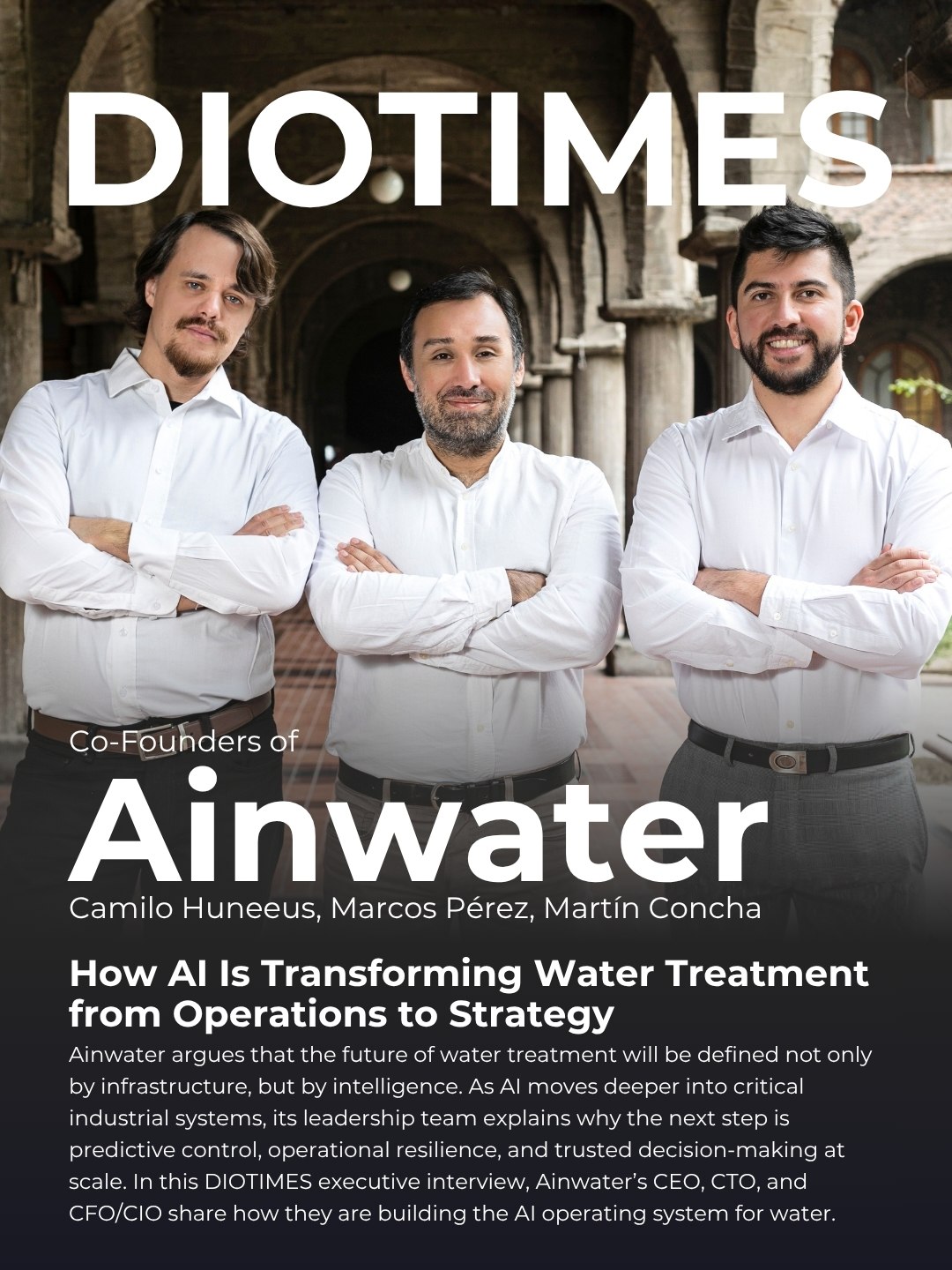
Camilo Huneeus — Chief Executive Officer. Industrial Chemical Engineer with a Master of Science in Environmental Management from Yale University. Over 10 years of international experience in water management across Latin America, Africa, and Asia.
Camilo Huneeus is the Chief Executive Officer of Ainwater and brings over a decade of international experience in water management across Latin America, Africa, and Asia. With a background in Industrial Chemical Engineering and a Master of Science in Environmental Management from Yale University, he combines field-based operational insight with a strategic understanding of sustainability and industrial transformation. In this interview, he discusses Ainwater’s mission, market positioning, and long-term vision for AI in water treatment.
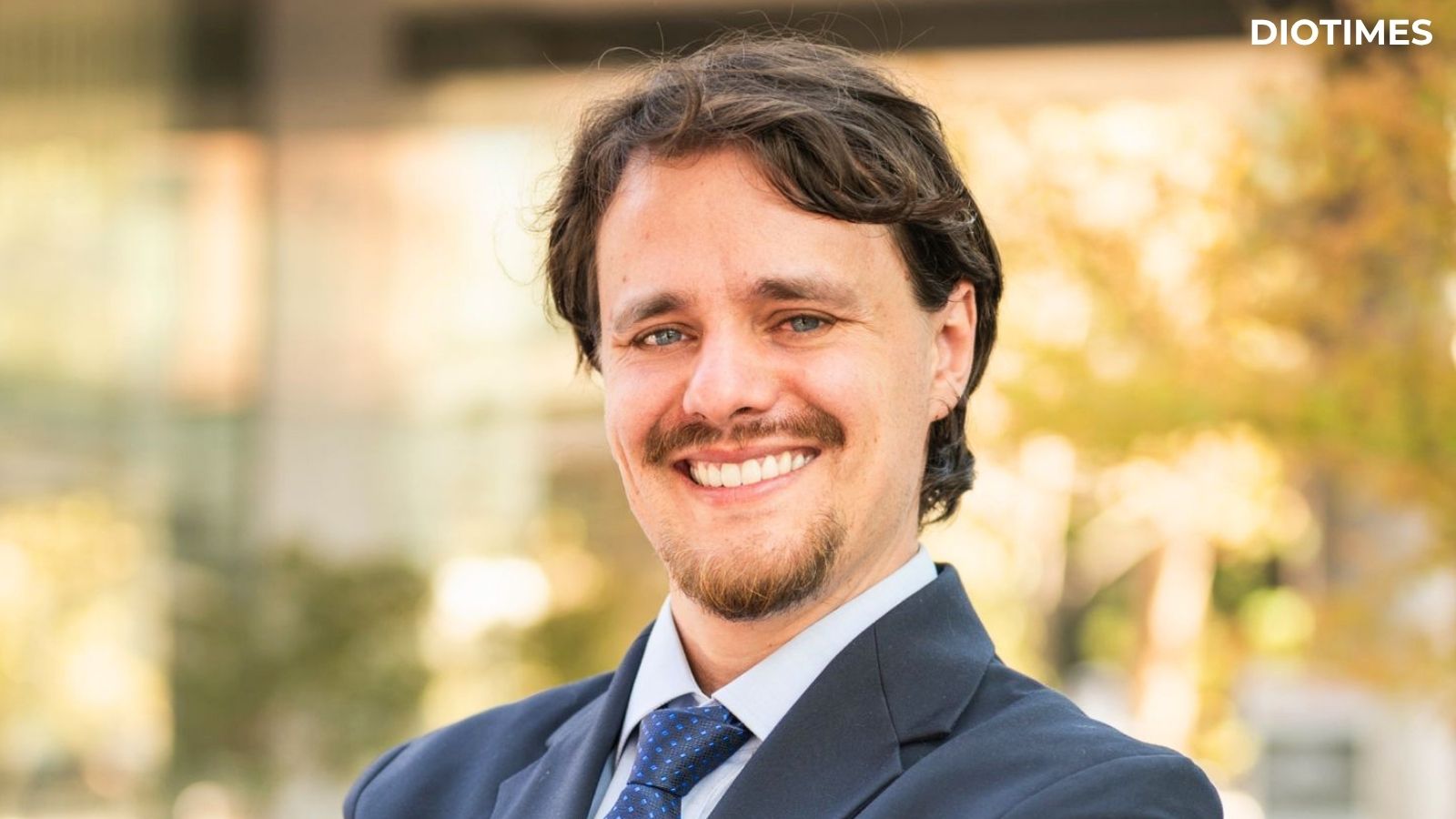
Camilo Huneeus — CEO of Ainwater
Please introduce yourself and tell us about your background.
I am Camilo Huneeus, Chief Executive Officer of Ainwater. I am an Industrial Chemical Engineer with a Master of Science in Environmental Management from Yale University, and I have over 10 years of international experience in water management across Latin America, Africa, and Asia.
What is Ainwater’s core mission and why does it matter right now?
To help better run and control water treatment plants through our AI-based control platform, which not only helps operators make better decisions, but actually act on them.
Every line of code we write and every solution we deploy has one mission: protecting water and transforming industries. We make utilities, businesses, and communities smarter. We turn sustainability from a buzzword into the new reality. We are making industries and utilities resilient by helping them better run their water, wastewater, and desalination systems.
It matters because we have no plan B. If water treatment plants do not work, a cheese factory cannot produce cheese and a city cannot function.
How did your background shape Ainwater’s approach?
I spent over a decade designing and operating wastewater treatment plants and designing water infrastructure projects across Latin America, Africa, and Asia before coming back to Chile to build Ainwater. I saw firsthand how operators, incredibly skilled people, were flying blind without data. My time at Yale studying environmental management gave me the framework to think systematically about the problem, but it was the years in the field that told me what the solution needed to feel like: practical, operator-friendly, and immediately impactful. That’s why Poseidón is built around the operator’s workflow, not around the technology.
How is Ainwater positioned in the global water-tech industry?
We are one of very few companies combining deep water treatment domain expertise with genuine AI capability, and that’s a rare combination. Most water-tech companies are either hardware-focused sensor companies or generic software platforms that know little about the intricacies of the water industry. We sit at the intersection: we understand what’s happening inside a treatment plant at a process level, and we can translate that into predictive models that actually work. GWI, the leading water intelligence publication globally, has recognized Ainwater alongside the world’s leading water-tech players, which validates our positioning.
What markets are you targeting and why?
We’re currently active in Chile, Mexico, Brazil, and Spain, serving over 100 treatment plants and impacting more than a million people’s daily water supply. Our focus is on large industrial operators and municipal water utilities, organizations that have the operational complexity where AI generates the most value. Latin America is our home market and growth engine: it has significant infrastructure investment coming, real water stress challenges, and a growing recognition that technology is essential to meet those challenges efficiently.
And we believe that the next bold step is Europe, via Spain. Spain already underwent the digitalization and instrumentation wave that LatAm is undergoing today. This turns Spain and the EU into even more fertile ground.
What has been Ainwater’s most significant milestone to date?
Reaching 100 sites using our solution, Poseidón.
How do you think about AI’s role in water management specifically?
As a co-pilot. And in the near future, as a pilot.
Today, AI in water is not about replacing operators; it’s about giving them superpowers. A skilled operator understands their plant deeply, but they can’t simultaneously monitor 50 variables, correlate historical patterns across thousands of hours of data, and predict what will happen three hours from now. Poseidón does exactly that.
Poseidón will become the pilot. It might replace the operator. But there are not enough operators. Fifty percent of water professionals will retire in the next decade.
How do you handle the trust barrier — convincing conservative utilities to adopt AI?
Water utilities are rightly conservative; their job is to deliver safe water every single day, without fail.
But we don’t target only utilities. Most of our customers are industries. Factories. But they have to be conservative for the same reasons.
So we don’t sell AI, we sell outcomes. We show prospective clients data from existing deployments: energy savings percentages, reductions in chemical consumption, and response time improvements. We also design our onboarding to be incremental; clients don’t have to change their entire operation on day one. We start with monitoring and alerting, build trust with the team, and then layer in predictive, optimization, and control features. Trust is earned through demonstrated results, and we’ve built the company to deliver those results reliably.
What does Ainwater’s growth trajectory look like over the next three years?
We are scaling across three vectors simultaneously: geography, verticals, and product depth. Geographically, we’re expanding our presence in Mexico and Brazil while exploring opportunities in Spain and other markets. On verticals, we’re moving beyond wastewater to drinking water, desalination, and industrial water reuse. On product, we’re deepening our AI modules, including our recently developed complex remote control module and AI agent for suggesting real-time control actions.
How is Ainwater structured as a business — what is the model?
We are a SaaS company at our core. Clients pay a recurring subscription to access the Poseidón platform, which includes the full analytics suite, the predictive monitoring layer, the virtual assistant, and our optimization modules. We connect to existing sensors and SCADA systems, so there’s no heavy hardware requirement. This makes our deployment fast and our cost of entry low relative to the value delivered. We work closely with Martín on the financial architecture to ensure we’re building a business with strong unit economics and a clear path to profitability as we scale.
What role have public grants and development funding played in Ainwater’s growth?
Grants and public funding have been essential to building a company that tackles a problem this important. Chilean government agencies were the first to believe in us. Thanks to their support, we developed the MVP and achieved our first commercial traction. Later, investors followed suit.
The Inter-American Development Bank has also played an important role via revenue-based financing through the AquaCerta program.
But I want to be clear: grants have funded our R&D and early deployments, not our operations. Our commercial revenue is growing independently, and that’s what gives the company its durability. Public funding accelerated our ability to solve the problem; commercial success is what ensures we can solve it sustainably.
What is your vision for Ainwater in ten years?
In ten years, I want Ainwater to be the operating system for water treatment globally, the platform that every plant operator and utility manager relies on to make decisions. Water scarcity will be one of the defining challenges of the coming decades, and AI-driven efficiency is one of the most powerful tools humanity has to stretch existing water resources further. If we do our job well, Ainwater will have contributed to reducing water losses, improving effluent quality, and enabling industries to serve growing populations sustainably. That’s the mission that gets me up every morning.
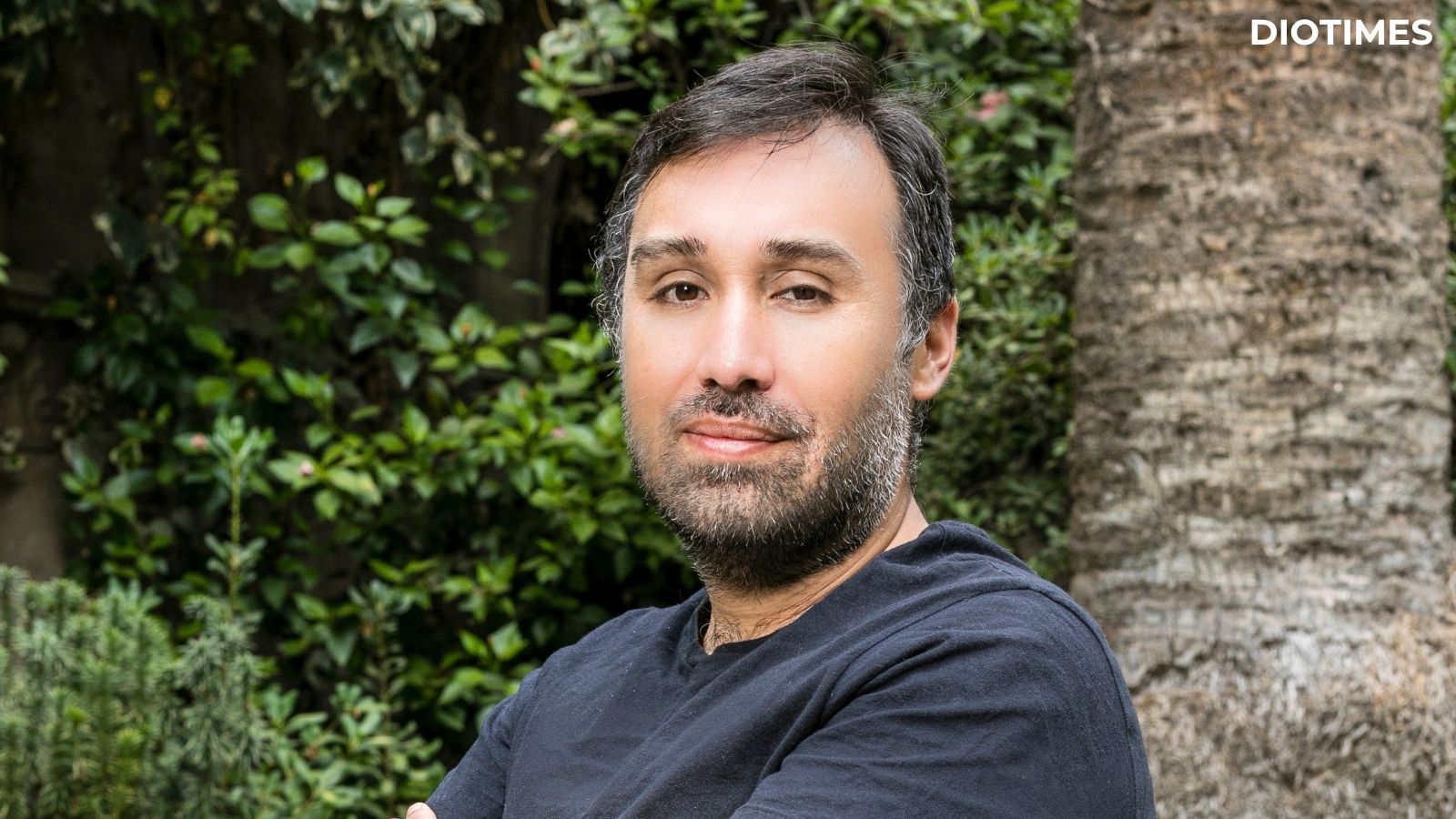
Marcos Pérez — CTO of Ainwater
Marcos Pérez — Chief Technology Officer. PhD in Theoretical Physics. Full-stack engineering and data science background with experience at ADP Brazil Labs and Agibank. AWS CTO Fellowship recipient. Responsible for Ainwater’s technology architecture, AI platform, and data science team.
Marcos Pérez is Ainwater’s Chief Technology Officer and leads the company’s technology architecture, AI platform, and data science team. With a PhD in Theoretical Physics and experience in full-stack engineering and data science at ADP Brazil Labs and Agibank, he brings mathematical rigor and engineering pragmatism to applied industrial AI. In this interview, he explains the architecture behind Poseidón, the challenge of building reliable models in noisy industrial environments, and where AI in water treatment is heading next.
Please introduce yourself and tell us about your background.
I am Marcos Pérez, Chief Technology Officer at Ainwater. I hold a PhD in Theoretical Physics and have a background in full-stack engineering and data science, with experience at ADP Brazil Labs and Agibank. I am also an AWS CTO Fellowship recipient, and I am responsible for Ainwater’s technology architecture, AI platform, and data science team.
What technical problem is Poseidón actually solving?
At its core, Poseidón solves a data integration and predictive modeling problem. Water treatment plants generate enormous amounts of data, from process sensors, SCADA systems, laboratory measurements, and operational logs, but that data is generally not useful for traditional mass-balance models. Traditional models require data for biokinetics, data that is not available. That’s why we use the existing data for an AI and ML approach. On the other hand, data lives in silos and is rarely used for prediction. We built Poseidón to aggregate all of that data into a single normalized model, apply machine learning to identify patterns and anomalies, and surface actionable recommendations in real time. The technical challenge is making that pipeline reliable enough to operate 24/7 in production environments where data quality is inconsistent and the stakes are high.
What is the architecture behind Poseidón?
Poseidón runs on AWS and a cloud architecture that allows us to serve dozens of clients simultaneously while maintaining strict data isolation. We use Amazon SageMaker for model training and deployment, which has allowed us to reduce model development time by 80% compared to our original pipeline. The platform ingests data from heterogeneous sources — Modbus, OPC-UA, REST APIs, and spreadsheets — normalizes it, and feeds it into a suite of models that range from anomaly detection to predictive process control. We’ve also integrated Amazon Bedrock to power our AI virtual assistant, which lets operators query plant data in natural language.
How do you build reliable AI models for environments with inconsistent data quality?
This is one of the hardest technical problems in applied industrial AI. Treatment plants often have sensors that drift, gaps in historical data, and operational practices that aren’t fully documented. Our approach is to build robust preprocessing pipelines that detect and flag bad data before it reaches the model, use ensemble methods that are more resilient to noise, and design models with uncertainty quantification so the system knows when to be confident and when to defer to the operator. We also build domain-specific features — SVI soft sensors, turbidity curves, and chemical reaction design — that encode process chemistry knowledge directly into the models.
How do you approach the challenge of deploying AI in safety-critical infrastructure?
Safety-critical environments require a different design philosophy than consumer AI. Today we don’t deploy models that make autonomous decisions; Poseidón is a decision-support system. Every recommendation is displayed to the operator with a confidence level and an explanation. We use interpretable models where possible, and when we use deep learning, we wrap it with explainability layers so operators can understand why the system is flagging an issue. Our deployment process also includes shadow-mode operation — the model runs alongside the existing operation before any recommendations are surfaced — so we can validate performance in the specific plant environment before going live.
What has been the most technically challenging thing you’ve built?
Creating a forecast model that forecasts operational behavior with high precision. One thing is to provide trends, for example, pH is going to increase. A different story is to say, pH is going to increase to 8.7 in the next two hours.
How does Poseidón integrate with existing plant infrastructure?
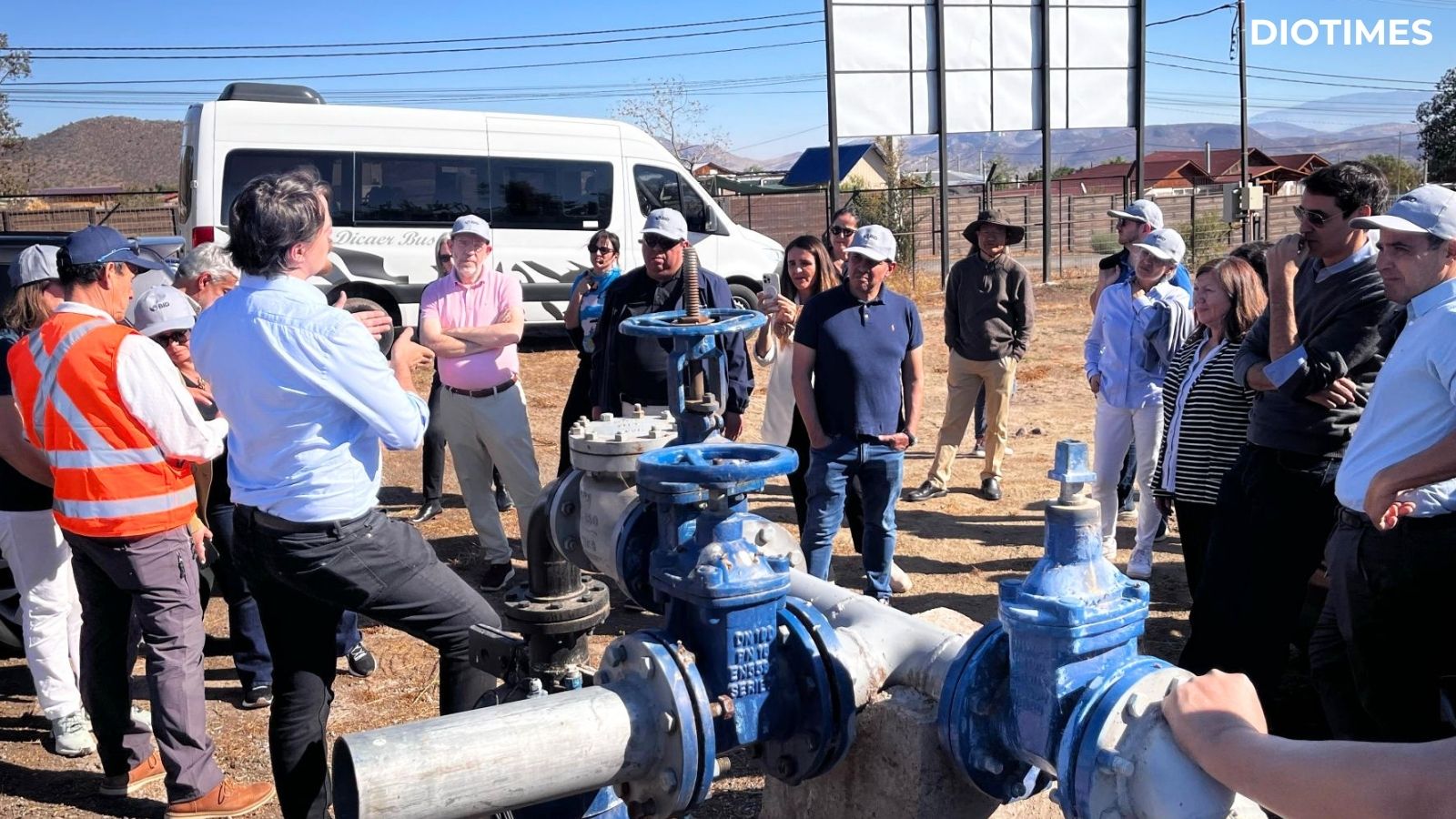
Most of our clients have existing SCADA systems, CLP, and sensor networks that they’ve invested in heavily. We designed Poseidón to be infrastructure-agnostic — we connect via an industrial computer using standard industrial protocols directly to the CLP, or via REST APIs where available, and we can also ingest data from manual exports if needed. We intentionally do not require clients to replace their existing control systems. This dramatically reduces the deployment barrier and allows us to be live on a plant in days rather than months. The cloud architecture means the computational heavy lifting happens on AWS, not on-site hardware.
What role does the virtual assistant play in the platform?
The virtual assistant is one of the features operators love most, because it makes the platform accessible to people who aren’t experts in water. An operator can ask in plain language, “Why is turbidity spiking?” or “What’s the recommended chlorine dose?” The assistant can also explain what is happening right now, reducing the time needed to analyze complex data.
How do you measure whether the AI is actually working?
We have a rigorous measurement framework that tracks prediction accuracy, false positive rates, and — most importantly — downstream operational outcomes. We measure energy consumption before and after deployment, chemical usage, unplanned downtime events, and effluent quality compliance. Our clients have seen up to 30% reductions in energy costs. We also track operator adoption metrics: how often do operators accept recommendations versus override them, and when they override, do subsequent outcomes validate the operator or the model? That feedback loop is essential for continuous model improvement.
How do you think about the build-vs-buy decision for AI components?
We build the domain-specific layers and buy the infrastructure. The biophysics-informed process models, the domain-specific feature engineering, and the treatment plant digital twin — that’s our proprietary technology and our moat. If you run your plant and want to build your own AI, that is going to take significant effort.
What does Ainwater’s data science team look like, and how do you hire?
We’re a small, highly specialized team. My background is in theoretical physics, which gives me a deep intuition for mathematical modeling and the ability to work at the intersection of domain science and machine learning. We hire people who are genuinely curious about the physical and biological systems we’re modeling — not just people who are good at running neural network experiments. We look for engineers who can read a paper on activated sludge modeling and then translate it into a production ML pipeline. That combination of theoretical depth and engineering pragmatism is rare, but it’s what makes the difference between a demo that works in the lab and a system that runs reliably in a treatment plant. That is why our DS team is led by Constanza Cordova, a Chemical Engineer.
Where is AI in water treatment headed over the next five years?
The trajectory is clear: from monitoring to prediction to autonomous optimization. Most platforms today, including early versions of ours, are primarily monitoring tools. The next wave is full predictive control — systems that don’t just flag that something is likely to go wrong, but proactively adjust setpoints to prevent it. Beyond that, I see that automation is going to reach the next level, where AI is going to take all the decisions, both physical and administrative. From how much chemical to dose to placing a purchase order for more chemical.
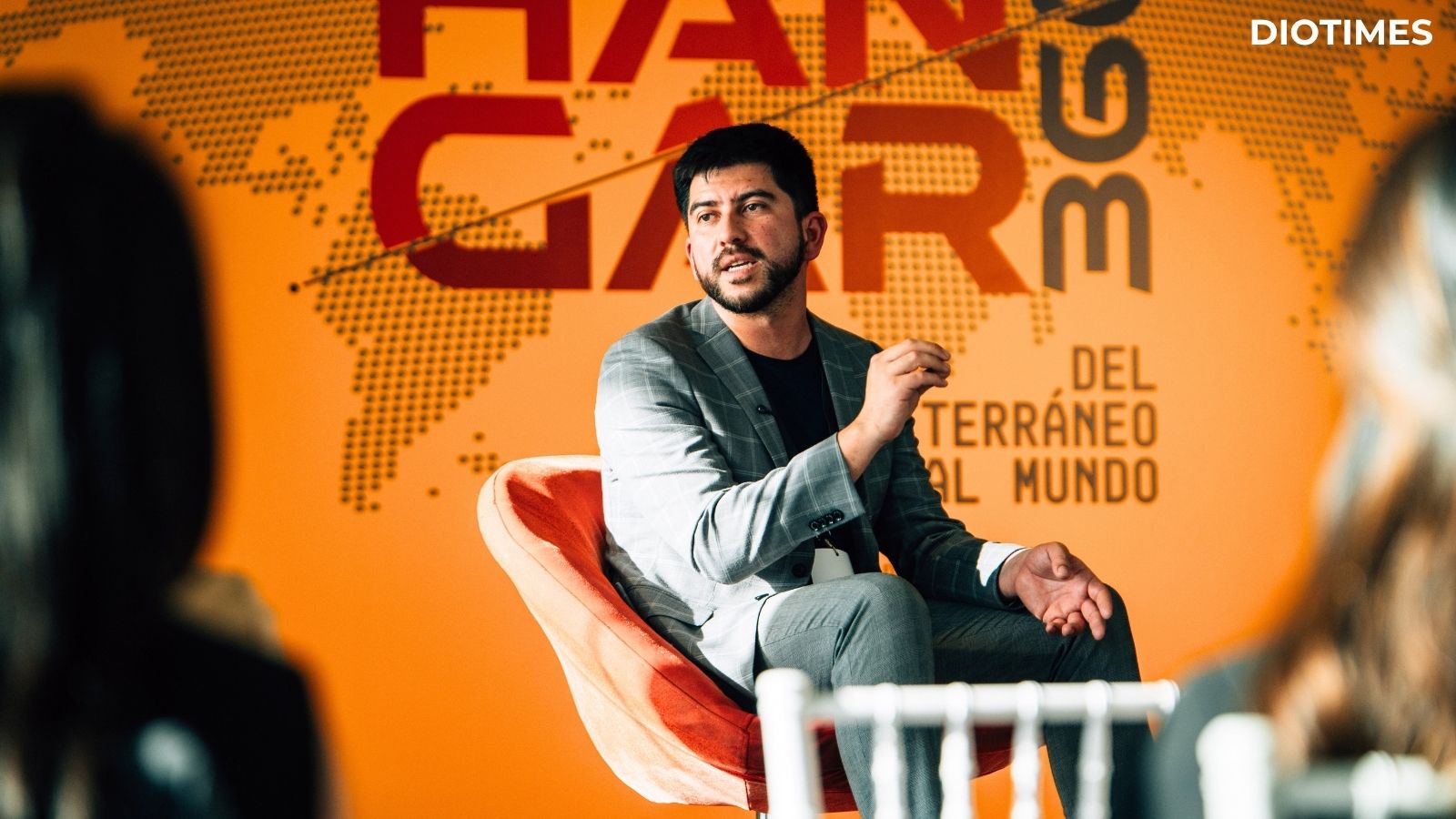
Martín Concha — CFO/CIO of Ainwater
Martín Concha — Chief Financial Officer & Chief Information Officer. Biotechnology Engineer with an MSc in Environmental Technology and Engineering. Co-founder of Ainwater.
Martín Concha serves as Chief Financial Officer and Chief Information Officer at Ainwater and is also one of its co-founders. With a background in Biotechnology Engineering and an MSc in Environmental Technology and Engineering, he oversees the company’s financial architecture and information strategy as it expands across multiple markets. In this interview, he discusses Ainwater’s SaaS model, capital allocation, grant structure, path to profitability, and long-term competitive advantage.
Please introduce yourself and tell us about your background.
I am Martín Concha, Chief Financial Officer and Chief Information Officer at Ainwater, and I am also a co-founder of the company. I am a Biotechnology Engineer with an MSc in Environmental Technology and Engineering.
What is Ainwater’s current financial structure and revenue model?
Ainwater operates on a SaaS model with a monthly or annual fee, priced according to the benefits the client will receive. We build the cash flow during the commercial process, so we can ensure there will be a high ROI. For example, we consider in the cash flow analysis not only energy and chemical cost reduction, but also personnel time, reduction of noncompliance risk, water footprint reduction, and many other positive impacts.
What was the structure and significance of Ainwater’s seed round?
We closed a $537,000 pre-seed round in August 2024, led by Südlich Capital with co-investment from Imagine Group, Buildtech Ventures, and Arpegio, plus angel investment from Brian Oduor. The round gave us the runway to expand our commercial team and accelerate deployment across new markets. More importantly, the investor syndicate brings strategic value beyond capital — Südlich Capital’s expertise in deep-tech, Imagine Group’s network in the software ecosystem, and Buildtech’s construction and infrastructure connections are directly relevant to our go-to-market. We structured the round to preserve significant founder ownership while bringing in partners who add real operational leverage.
How do you think about the unit economics of the Poseidón platform?
Our unit economics improve significantly with scale, which is typical of SaaS businesses. The cost of serving an additional client is primarily the data infrastructure and customer success resources, while the underlying model development and platform infrastructure are shared. As we grow the number of connected plants, the marginal cost per plant decreases while the value of the network — more data, better models — increases. We track customer acquisition cost, lifetime value, and payback period rigorously. The key metric for us right now is reducing time-to-value for new clients, because faster demonstrated ROI accelerates expansion within existing accounts.
How has grant and development funding been structured in relation to commercial revenue?
The support of Chilean government grants was essential to our development. It was the government that took the risk of financing the technology development, not private investors.
But we’ve been deliberate about keeping grant funding and commercial revenue clearly separated in our financial architecture. Commercial revenue funds our operations and go-to-market. This structure ensures that our commercial pipeline is not dependent on grant continuity, which is important for both financial resilience and investor confidence. The BID Lab AquaCerta program is a great example: it funds, through a reimbursable grant, the development of our technology for rural services, which we commercialize independently.
What is the capital allocation strategy as you scale?
Our current capital allocation prioritizes three things: product development to deepen our AI capabilities, customer success to drive retention and expansion within existing accounts, and market development in Mexico, Brazil, and Spain, where we see the clearest near-term revenue opportunities. We are intentionally lean on overhead and selective about when we add headcount. As a SaaS business, the key investment is in the product and the people who build it — those investments compound. We’re not yet at the scale where geographic expansion requires large fixed-cost investments, but as we grow, we’ll need to build local teams in key markets, and that’s factored into our financial model.
How do you approach financial planning in a business with both SaaS revenue and project-based grants?
We do not depend on grants. Grants are for deep technological advances and should only be used when there is deep-tech development that is strategic for government and other agencies.
What KPIs do you track most closely as CFO/CIO?
On the financial side: MRR growth rate, net revenue retention, CAC payback period, and gross margin. On the operational side: plants connected, data uptime across connected plants, and the number of active users within each client organization. The last metric — active users — is my early warning indicator for churn risk. A client with five active users daily is far more entrenched than one where only the administrator logs in monthly. As CIO, I also track which new modules or features are used the most.
How do you think about the regulatory and compliance environment for Ainwater infrastructure?
The more regulation, the better for us. Industries and utilities operate under strict regulatory frameworks — effluent quality standards and reporting requirements. We designed Poseidón as a decision-support system precisely to navigate this environment: the operator retains full authority and responsibility for operational decisions, and our system provides information and recommendations. This isn’t just a regulatory positioning choice — it’s the right design for safety-critical infrastructure. From a compliance perspective, we also maintain rigorous data privacy and security standards, because we’re handling operational data from critical infrastructure that requires enterprise-grade protection.
What is the financial opportunity in the rural water services sector that BID Lab is funding?
Rural water services in Latin America are chronically underfunded and understaffed — a single operator often manages multiple small plants across a large geographic area with minimal data visibility. BID Lab’s AquaCerta program is funding our deployment across dozens of rural services over three years, which will demonstrate that our platform is viable not just for large industrial clients but for resource-constrained utilities. The financial opportunity is significant: there are thousands of rural water services across Latin America, and if we can develop a cost-effective, scalable model for that segment, it represents an entirely new market vertical.
And there is something very interesting about this vertical: it opens up a new market for corporations. Central to the business model is that corporations operating in water-stressed basins can give back to the communities by applying this solution.
How do you think about the path to profitability?
We are building toward profitability through MRR growth and operating leverage. Our cost structure is primarily people and cloud infrastructure, both of which scale sublinearly as revenue grows, which means our path to breakeven is driven by reaching a revenue threshold, not by dramatic cost cuts. We have a clear view of what that threshold looks like based on our current unit economics, and we’re targeting it within our current runway. I want to be disciplined about when we raise our next round: we should raise from a position of strength, with clear metrics that justify a valuation step-up, not because we’re running low on cash.
What gives you confidence in Ainwater’s long-term competitive position?
Three things: data moat, domain expertise, and infrastructure partnerships. Every plant we connect contributes operational data that trains better models — that data advantage compounds over time and is very difficult for a new entrant to replicate quickly. Our team’s domain knowledge in water treatment process chemistry is a genuine barrier — you can’t just hire machine learning engineers and build what we’ve built; you need people who understand biological treatment kinetics and chemical reactions.