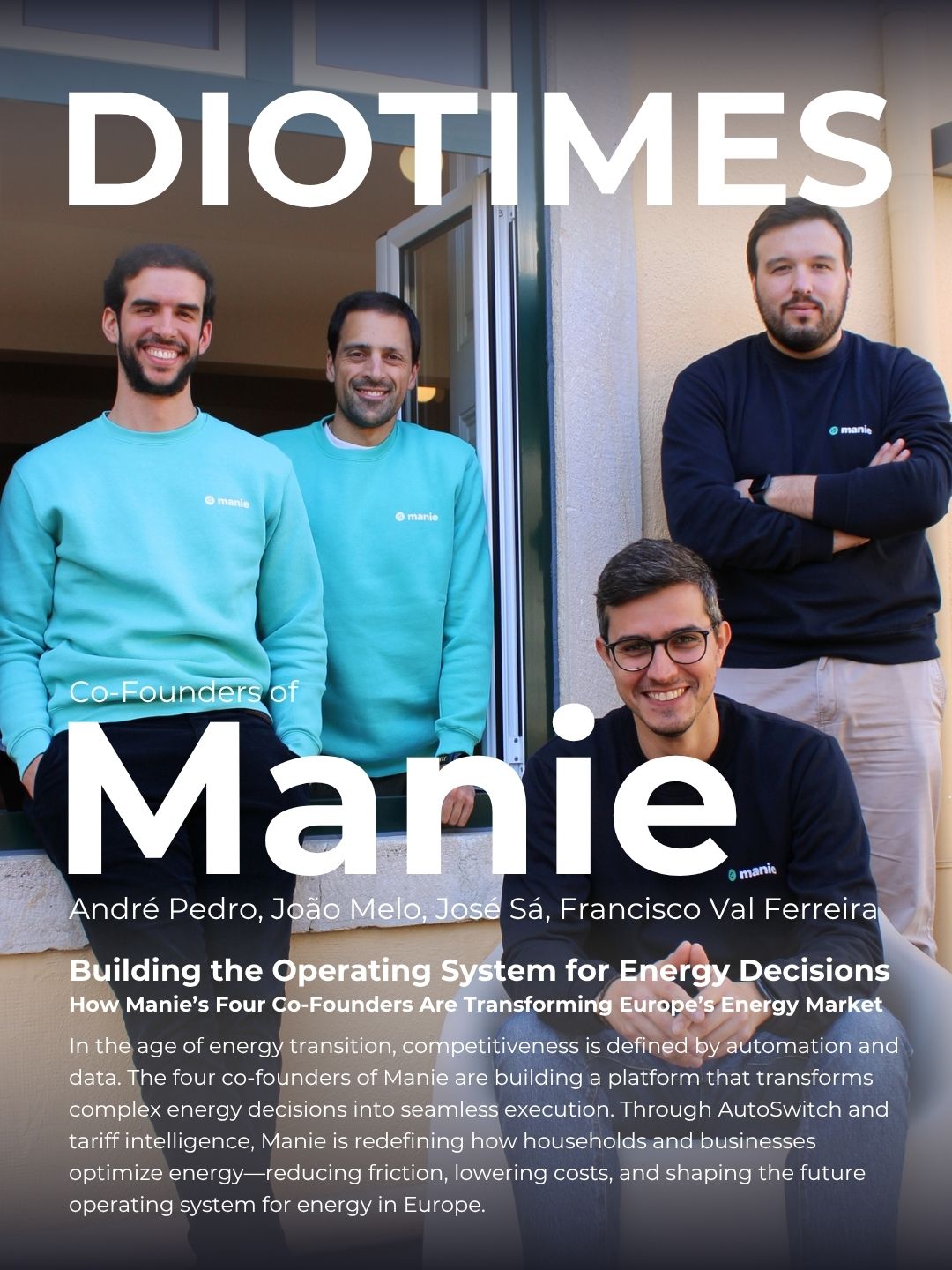
Manie is building a platform that transforms how households and businesses manage energy contracts—moving from one-time decisions to continuous optimization. By combining real consumption data, tariff intelligence, and automated switching, the company addresses structural inefficiencies in the energy market that cause consumers to systematically overpay.
Founded by four co-founders with complementary expertise across product, engineering, operations, and strategy, Manie operates with a collaborative leadership model. The platform goes beyond comparison by executing decisions automatically, positioning itself as an infrastructure layer for energy management.
As energy markets become increasingly complex and decentralized, Manie’s long-term vision is to become the operating system for energy decisions—an integrated system that continuously optimizes consumption, pricing, and supplier relationships across Europe.
Founders & Company Introduction
To begin, could each of you briefly introduce yourselves, including your background and what led you to co-found Manie?
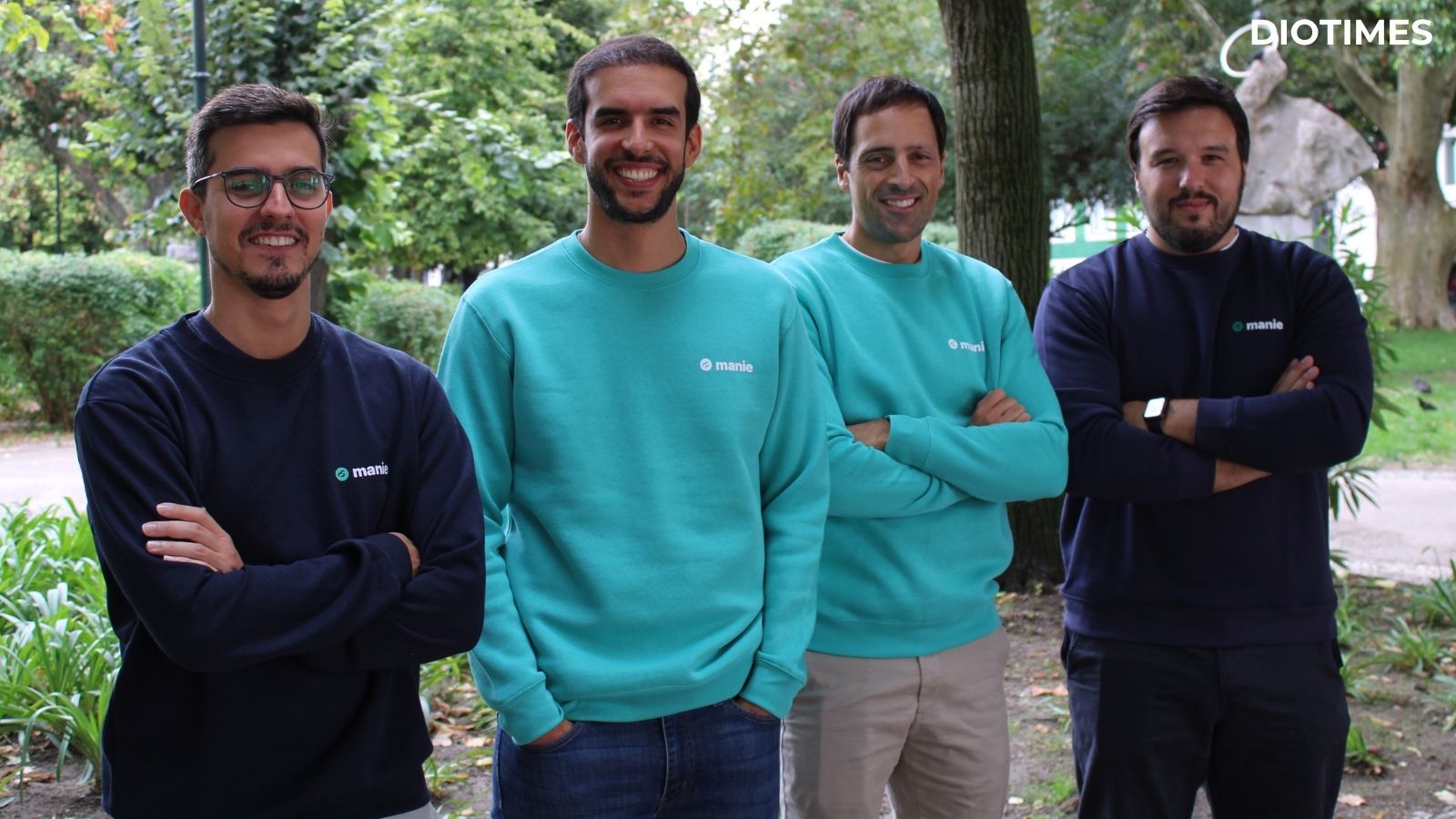
Manie was founded by four friends with complementary backgrounds across product, engineering, operations and business.
André Pedro focuses on the financial and implementation of the strategic direction of the company, defined by all four. João Melo focuses on operations, customer experience and execution discipline. José Sá focuses on engineering and platform architecture, with an emphasis on building scalable and robust systems. Francisco Val Ferreira focuses on product strategy, execution and user experience.
The starting point was a shared frustration with how opaque and inefficient the energy market is for consumers. From different angles, we had all seen the same pattern repeat itself: people consistently overpaying, not because they lack options, but because the system is difficult to navigate and changes too frequently for a one-time decision to hold over time.
That gap between what people pay and what they could be paying is what led us to build Manie.
For readers encountering Manie for the first time, how would you describe the company in a clear and simple way? What problem are you solving in the energy market?
Manie is a platform that ensures households and businesses are always on the most competitive energy contract available to them.
The problem we solve is not a lack of options. There are too many offers, prices change frequently, and comparing them properly requires time, data and ongoing monitoring. Most people either don’t switch or do it once and assume the job is done.
In practice, that means a large part of the market systematically overpays. Manie removes that responsibility from the user by continuously analysing the market and executing switches when there is a clear advantage, automatically.
Founding Story & Market Insight
What specific inefficiencies or structural problems in the energy market convinced you that this business needed to exist?
There are three structural issues.
First, pricing is dynamic. Suppliers update tariffs regularly based on wholesale markets and commercial strategy. A good contract today can become uncompetitive within months.
Second, comparisons are inherently complex. The real price depends on consumption, contracted power, tariff structure and contract conditions. Generic estimates are often misleading.
Third, the process is not continuous. Most tools are built around one-off comparisons. They solve a moment in time, but not the ongoing problem.
These three factors combined create a persistent gap between what people pay and what they could be paying.
You bring together four co-founders with complementary expertise. How did this team come together, and what made you confident this was the right combination to build Manie?
The team came together through previous professional interactions, but all in all we were friends. And we have a shared interest in building products that solve real, recurring problems.
What gave us confidence was the coverage across critical areas: product thinking, technical execution, operational discipline and customer understanding. In a market like energy, where the complexity is both technical and regulatory, that combination is essential.
It also helped that alignment on standards was clear from the start. We tend to converge quickly on decisions because we share the same bar for what the standards should be and how to close this gap in the energy market.

Product, Technology & AI
Manie combines tariff intelligence, invoice-reading capabilities, and automation. Could you walk us through how your platform works from a user’s perspective?
From the user’s perspective, the process is straightforward.
After downloading the app, the starting point is connecting a contract, typically by uploading the most recent energy bill. That allows the platform to extract real consumption data instead of relying on estimates.
Based on that data, Manie compares available offers in the market and identifies the most competitive option at that moment.
From there, the platform continues to monitor the market over time. When a better option emerges, depending on the plan, the user is notified and the switch is executed automatically, while the user can refuse it if they dislike that option.
The key difference is that this is not a one-off recommendation. It is an ongoing process of constant savings.
Your AutoSwitch technology is a core differentiator. How does it function in practice, and what makes it difficult for competitors to replicate?
AutoSwitch continuously evaluates whether the user’s current contract remains competitive.
This requires three things working together: accurate consumption data, up-to-date tariff structures across suppliers, and a forward-looking view of pricing for indexed offers.
When a materially better option is identified, the system initiates the switch process, handling the operational side with the supplier.
What makes it difficult to replicate is not necessarily a single feature, as it requires the integration of multiple layers: data ingestion, pricing logic, operational execution, key partnerships with providers and the trust of the public. Each of these has to work consistently for the product to deliver real value.
How are you currently leveraging data and AI within the platform, and how do you see that evolving in the coming years?
Today, data is central to two areas: understanding consumption patterns and modelling tariff outcomes.
AI plays a role in improving data extraction, anomaly detection and recommendation quality, but also in the team’s everyday productivity and deliverables.
The direction is clear: less manual input, more accurate decisions.
As a team, we are bullish on how AI will revolutionize how companies operate and we are taking the necessary steps to have AI in the center of our decisions and operations.
Business Model & Growth Strategy
How is Manie’s business model structured? How do you align value creation for users with revenue generation for the company?
The model is divided into two categories: partnerships with providers and subscription-based.
Users pay for continuous monitoring and, in higher tiers, for automation through AutoSwitch Unlimited plans, which differ in the scan cycle for better tariffs and the capacity for having different contracts connected. We have both individual clients and businesses.
We also have partnerships with several providers that pay us a fee for new users. However, that doesn’t guarantee more switches for them unless they are the best possible offer.
You are already operating across Portugal and Spain. What have been the key drivers of growth so far, and what lessons have you learned from scaling across markets?
The main driver of growth has been the joint frustration over overpaying in energy bills.
From a market perspective, both Portugal and Spain share structural similarities, but execution details differ. Regulatory frameworks, tariff structures and consumer behaviour require local adaptation.
One key lesson is that trust needs to be built early. Energy is a critical service, and switching decisions are not taken lightly. Clear communication and reliability in execution matter as much as the savings themselves.
The energy space includes comparison platforms, utilities, and emerging SaaS players. How do you define your competitive positioning within this ecosystem?
We sit in a different category from traditional comparison platforms.
Most comparators provide only a snapshot, utilities provide supply, and many SaaS tools often focus on monitoring.
Manie combines continuous comparison, real consumption data and execution. The closest description is an ongoing management layer on top of the energy contract.

Leadership & Organizational Design
Unlike many startups led by a single CEO figure, Manie operates with a collaborative leadership model among four co-founders. How does decision-making work in practice, and what are the advantages and challenges of this structure?
Decision-making is distributed but structured.
Each founder has clear ownership over their domain, which allows for speed in day-to-day execution. For cross-functional decisions, we align quickly based on data and expected impact.
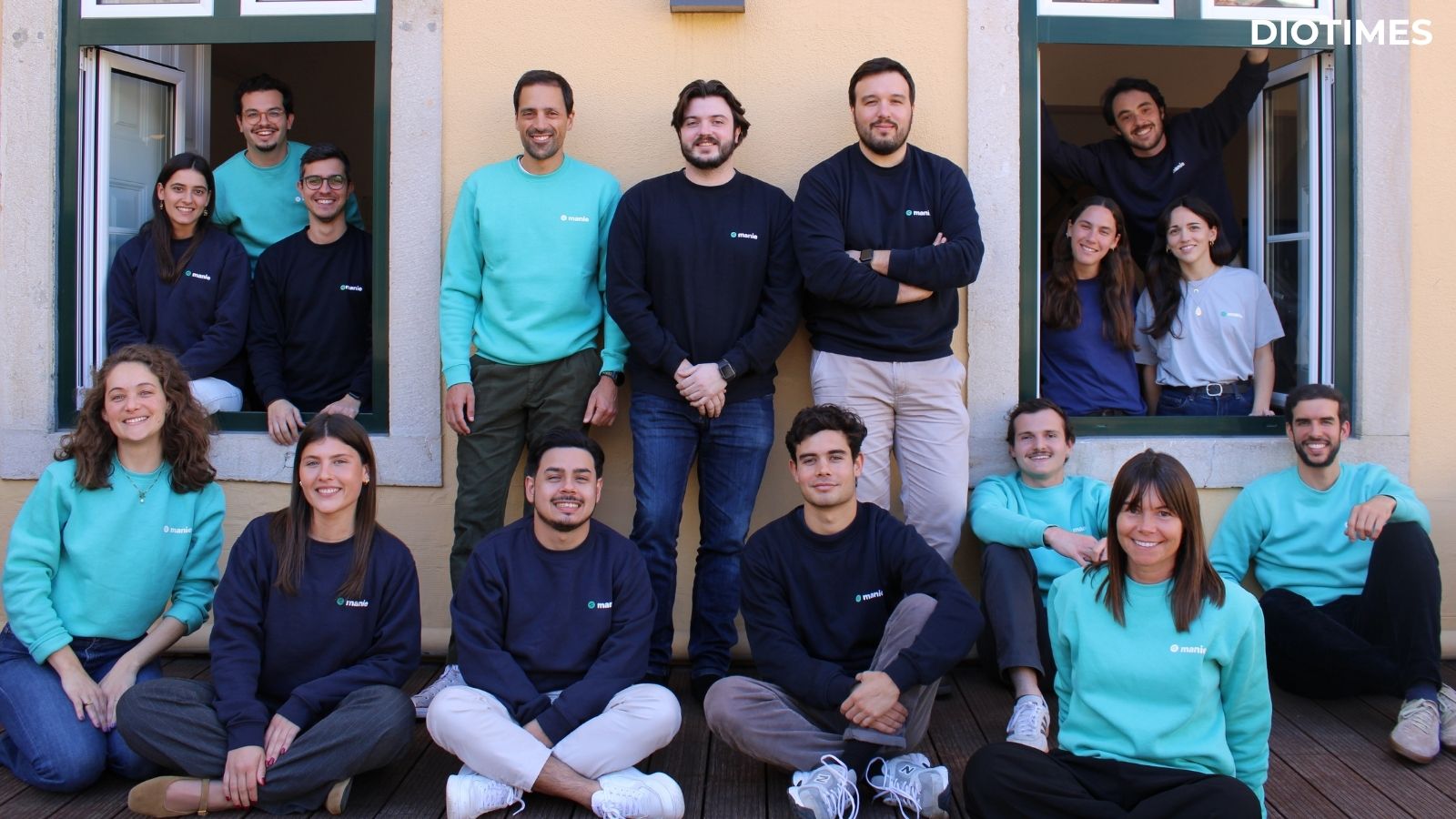
The advantage is coverage and depth across key areas, and we feel connected with our entire team.
The challenge is maintaining clarity and unblocking decisions when we don’t all agree. That requires discipline in communication and well-defined responsibilities, as well as transparency amongst ourselves and the team.
Vision & Industry Transformation
You describe your long-term vision as becoming the “operating system for energy decisions.” What does that look like in concrete terms?
In practical terms, it means becoming the default layer through which energy decisions are made.
Today that starts with supplier selection and switching. Over time, it extends to how consumption is managed, how different energy sources are combined, and how decisions are optimised continuously.
The goal is to move from isolated decisions to an integrated system that manages energy as an ongoing process.
And who knows if this operating system can’t be extended to other decisions in our life?
As energy markets move toward decentralization and digitalization, how do you see the role of platforms like Manie evolving over the next 5–10 years?
As markets become more decentralized, complexity increases. Users will have access to multiple sources of energy, dynamic pricing and new contractual models. That increases the number of decisions that need to be made.
Platforms like Manie become more relevant in that context because they abstract that complexity and optimise outcomes continuously. The role shifts from comparison to planning.
Closing
Finally, what advice would you give to entrepreneurs building technology-driven platforms in complex, regulated industries like energy?
Start with a real problem that persists over time.
In regulated markets, surface-level solutions tend to break because they don’t account for underlying complexity. It is important to understand how the system works end-to-end before building on top of it.
The second point is to focus on execution reliability. In industries like energy, trust is built through consistency, not messaging.
And finally, be prepared for slower cycles. Regulation, partnerships and operational dependencies require patience, but they also create barriers that are difficult to cross once the product is established.