As industries continue to digitize, one major blind spot remains: indoor environments. While GPS has transformed how people and businesses navigate the outside world, many large buildings, factories, hospitals, airports, and industrial facilities still lack precise visibility into what happens indoors.
IPIN LABS is addressing this challenge through AI-driven indoor positioning technology. By using existing infrastructure such as Wi-Fi, smartphone sensors, and deep learning, the company aims to deliver precise indoor location intelligence without requiring heavy hardware deployment.
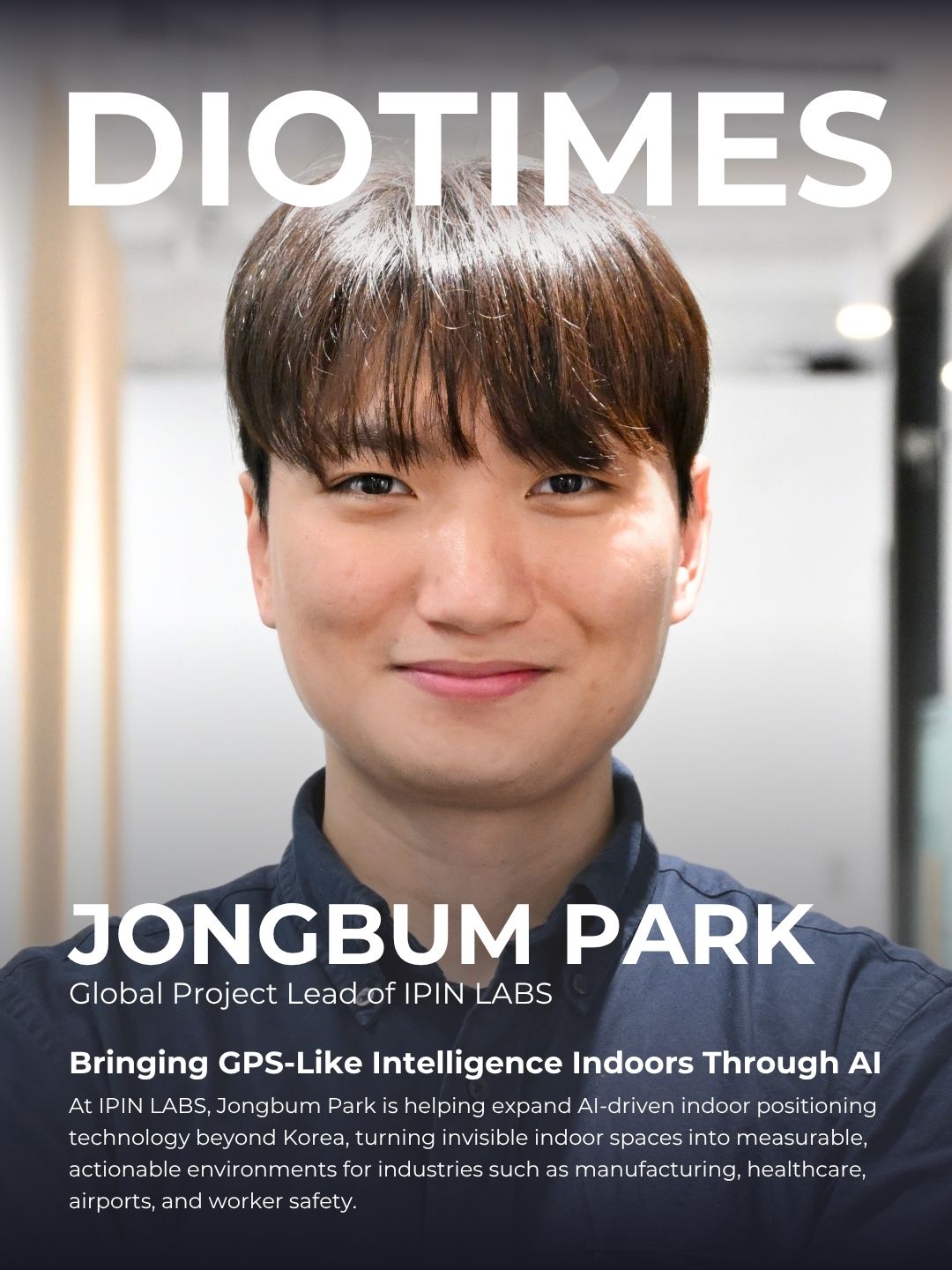
For Jongbum Park, who works on business development and global expansion at IPIN LABS, the mission is both technological and human. His role sits at the intersection of advanced AI, real-world operations, and global client communication. In this DIOTIMES interview, he discusses his career journey, the potential of indoor positioning, the importance of transparency, and what it takes to bring emerging technology into complex industrial environments.
Could you walk us through your career journey and what led you to focus on AI-driven indoor technology?
I studied economics at a university in Japan and graduated about a year and a half ago. Like many people finishing university, I was not entirely sure what I wanted to do. What I did know was that language was one of my strengths, and I wanted to find a path where that strength could matter.
I was also always drawn to technology. I genuinely believed it was one of the few things that could create real, tangible impact on people’s lives.
I started in marketing, but over time I realized that I wanted more human connection and more direct communication. That naturally pulled me toward a more client-facing role.
IPIN LABS found me before I found them. I received an interview offer, looked the company up, and found a YouTube video of the CTO explaining what they were building. I went from mildly curious to genuinely excited.
I have always thought GPS is one of the most remarkable inventions ever, yet people often do not appreciate it because it is simply always there. The idea that we could bring that same kind of intelligence indoors, where so much real human activity happens, really clicked for me. I joined about eight months ago and have not looked back.
What attracted you to IPIN LABS, and how does your role contribute to its global expansion?
The technology attracted me first. The idea that we could build precise indoor location intelligence on infrastructure that already exists, without heavy hardware investment, immediately struck me as something that could be applied almost anywhere.
But what really sealed it was the energy of the team. IPIN LABS is an early-stage startup genuinely trying to take something global, and there is something exciting about being part of that journey.
Most of our clients have been in Korea up until now, and I came in to help change that. In the past eight months alone, I have visited five different countries and seven different cities for projects and events.
For an early-stage startup, that kind of groundwork does not happen by accident. We are actively going out into the market, exploring opportunities, and discovering what this technology can mean for different industries and countries.
You work at the intersection of technology and business. How do you bridge these two domains effectively?
A lot of it comes down to explanation.
Indoor positioning is still a relatively new concept for many people, and everyone comes in with a different level of understanding. The first thing I try to do is meet people where they are. I never assume that technical depth is what someone needs.
Sometimes the most valuable thing I can do is explain a complex idea in a way that makes sense to someone, regardless of their background.
But I also try not to be an answering machine. I think conversation should be reciprocal. When someone asks me a question, I often ask a question back before answering, because I want to understand the context behind what they are asking.
What problem are they actually trying to solve? What does success look like for them?
The more I understand their reality, the more useful my answer becomes. Bridging technology and business is really about structuring communication in a collaborative way, not simply transferring information in one direction.
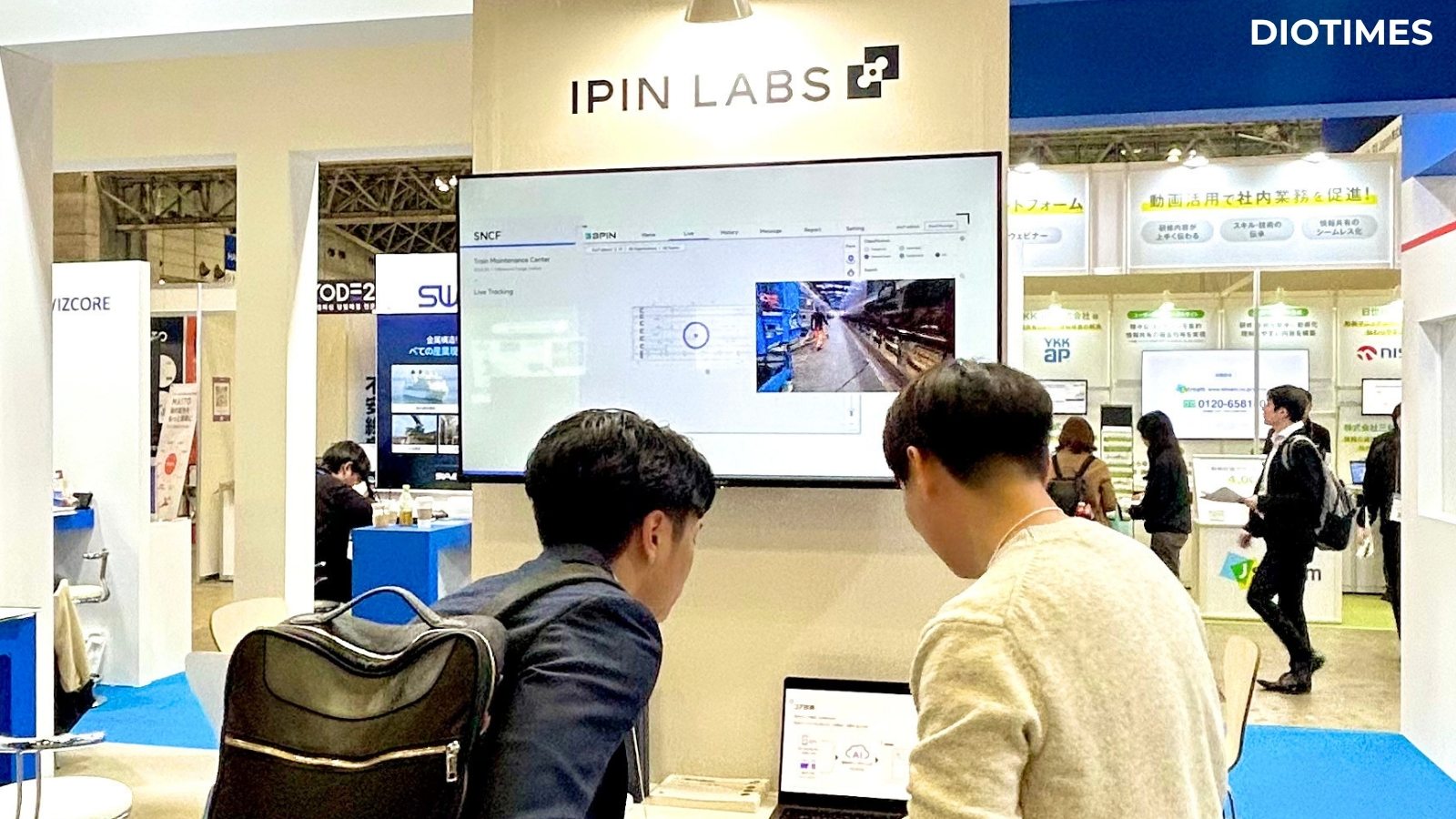
Indoor positioning is still an emerging field globally. How do you see this market evolving over the next five to ten years?
I think we are still in the early chapters.
Most organizations today do not even realize that their indoor environments are a blind spot. They have incredible visibility into many parts of their operations, but the moment you step inside a building, that visibility often disappears.
As industries continue to digitize, I think that gap will become harder and harder to ignore.
Over the next five to ten years, I expect indoor positioning to shift from being seen as a niche technology to something much more foundational. The solutions that win will be the ones that are practical to deploy and easy to integrate into systems that already exist.
It is not just about knowing where something is. It is about making that location data useful within real workflows and decision-making.
We are still early, and that is part of what makes it exciting.
What differentiates IPIN LABS’ technology from other indoor navigation or positioning solutions?
Most legacy systems rely on dense hardware installations, such as beacons and anchors spread across a facility, or complex data collection processes that require a lot of time and resources to set up.
That creates a real barrier for many organizations. The cost, the complexity, and the time all add up quickly.
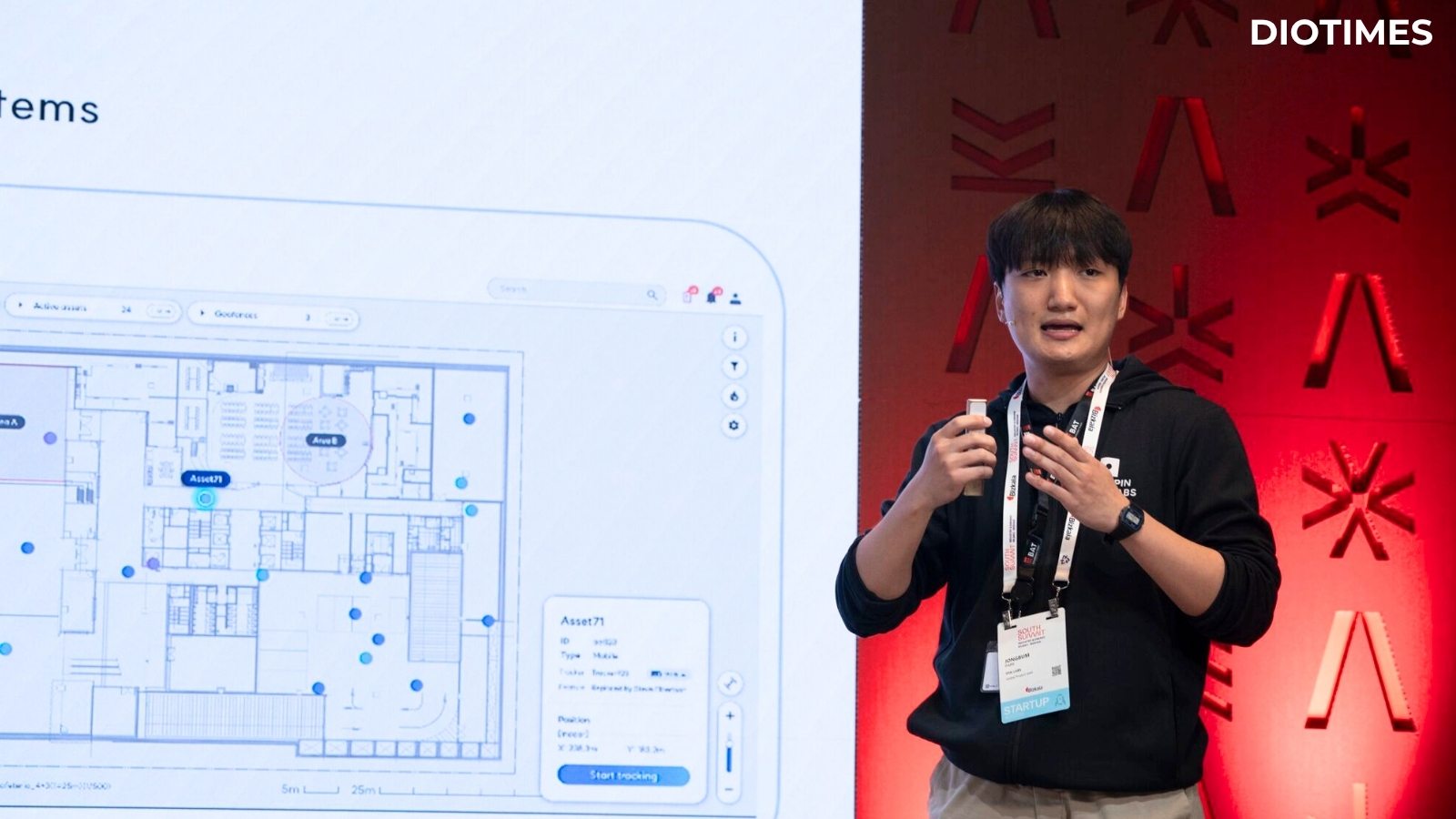
What IPIN LABS does differently is build on infrastructure that already exists. Wi-Fi is already everywhere, and people already carry smartphones with IMU sensors. We fuse that signal and motion data through deep learning and turn it into precise, reliable indoor location intelligence.
No heavy hardware rollout is required.
But another important point is that we are not just focused on positioning as a technical output. The real question is what you do with that data. Our focus is on making location intelligence actually useful within real operational contexts, whether that means asset tracking, workflow visibility, or safety management.
Can you share key use cases where AI-driven indoor positioning creates the most value today?
The best way I can answer this is through what we are actually working on.
We have a project tracking more than 6,000 high-value assets in a semiconductor manufacturing facility. In that kind of environment, a misplaced asset can mean production downtime or unnecessary purchases of equipment that already exists somewhere on the floor.
We also work on worker safety. In one of the tallest buildings in Korea, we track worker location and health data through smartwatches in real time. These are people working in large, low-visibility areas, and when something goes wrong, every second matters.
In hospitals, we help staff locate medical devices, understand usage patterns, and manage assets more efficiently. Anyone who has spent time in a large hospital knows how much time can be lost simply looking for things.
We are also working with airports and car manufacturers. These are different industries, but the core problem is the same: large indoor environments where the lack of visibility creates real cost, risk, and inefficiency.
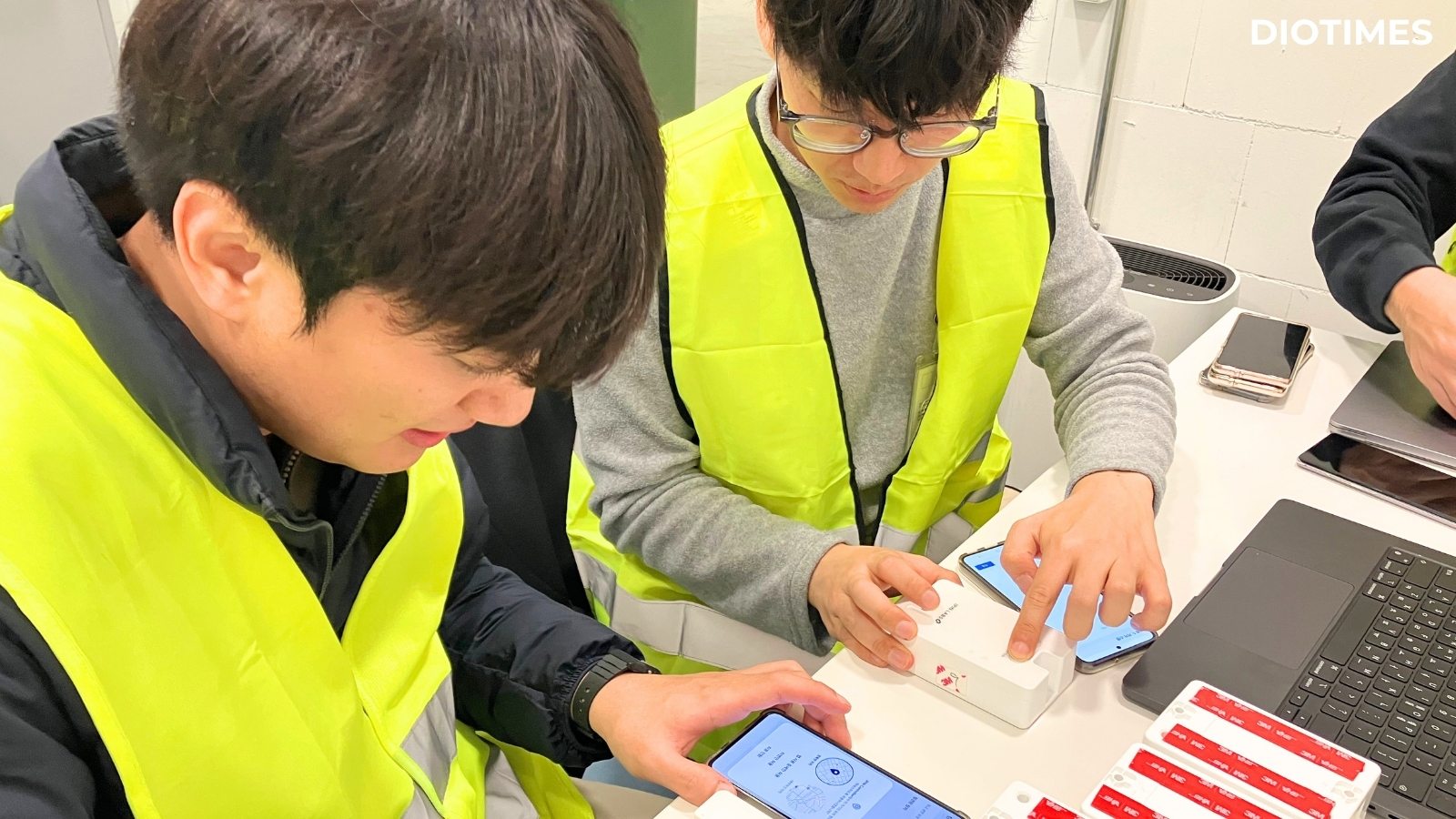
How do you approach deploying advanced AI technologies in real-world, often unpredictable environments?
The truth is that no two deployments are the same.
You can have a solid plan going in and still run into things you did not anticipate. Limited Wi-Fi coverage in certain areas of a facility, for example, can slow things down in ways that are hard to predict until you are actually on site.
Sometimes a customer comes in with a specific feature requirement that we do not offer as a standard part of the product. These things happen.
That is why we almost always start with a proof of concept. Before anything else, we want to validate the use case, understand the environment, and figure out where our solution may need to be tailored to fit the customer’s specific problem.
It is a much more honest way to work, and it tends to build more trust than going in with a one-size-fits-all pitch.
Once we have proven the value in a controlled way, we scale. Throughout that process, I prioritize transparency, both about what we can do well and where we are still figuring things out. In unpredictable environments, that kind of honesty matters more than having a perfect answer for everything.
You guide projects from early strategy to deployment. What are the biggest challenges in this process?
Alignment is the hardest part, and I mean that on two levels.
Internally, we are handling multiple projects at the same time, so keeping the team on the same page across all of them is a real challenge. It requires constant communication about where we are on each project and what the next steps should be.
Externally, we are aligning with leads, prospects, and partners on timelines, goals, features, and expectations. Everyone comes in with their own priorities and their own definition of success. Those things can shift as a project moves from early conversations into actual deployment.
When both sides are in sync, everything moves faster and more smoothly. That is why I treat alignment as a continuous process, not a one-time conversation.
How do you manage and align diverse stakeholders across global projects?
I am still learning a lot about how to navigate different cultures and business environments. But what I keep coming back to is clear communication and transparency.
In global projects, there is a lot of room for misunderstanding, so I put a lot of effort into how I phrase things before I communicate. The goal is always clarity.
I also try to be straight with people. If we believe our solution can genuinely help, I will make that case clearly. But if we cannot, I will say that too.
I think that kind of honesty is what builds real trust over time. At the end of the day, B2B works based on trust. That is true regardless of the country or culture. If the people you are working with trust you, everything else becomes much easier.
In complex environments, how do you balance speed, execution, and decision-making quality?
I will be upfront. I am still early in my career, and I have not faced many situations where I had to make that trade-off under real pressure.
But my instinct is to prioritize decision quality over speed. Moving fast feels good, but if the decision is wrong, you end up spending more time fixing it than you saved by rushing.
That said, I think the real skill is knowing which decisions require deliberation and which ones simply need to get done. I am still learning how to make that call, but that is the balance I am working toward.
You emphasize transparency in high-pressure situations. How do you put that into practice?
A big part of how I think about this goes back to someone who has heavily influenced the way I approach my work.
Peter Ahn is a tech sales coach and currently the CCO at TigerBeetle. He talks a lot about the importance of transparency, honesty, and bringing your authentic self into the sales process. I read his book and listened to his podcast and videos, and a lot of what he says really clicked for me.
The core idea I took away is that trust is everything. Trust does not come from having the perfect answer or always sounding confident. It comes from being honest.
I am not sure there is a specific “how-to” for this. You either choose to be honest or you do not. I just try to make that choice consistently, even when it is uncomfortable.
If something is not going as planned, I would rather say that clearly and early than let it linger. If we cannot do something, I say so.
At the end of the day, I want to be remembered as an honest person. I think that is the foundation of everything else.
In rapidly evolving and ambiguous environments, how do you maintain consistency while adapting to change?
As the person primarily responsible for business development on the team, I take full ownership of what I do. That means being self-directed and consistent even when things are uncertain or changing around me.
For me, that consistency comes down to two things: constantly creating new opportunities and making the right decisions to help those opportunities mature.
That is what I keep coming back to, regardless of what changes around me.
And things do change. A lot. In an early-stage startup, unexpected things come up all the time, and you rarely see them coming. You just have to accept that and respond as they come.
What keeps me grounded through that is belief: belief in the technology, in the product, and in the people I work with.