Could you briefly introduce yourself and your work at IE School of Arts & Humanities?
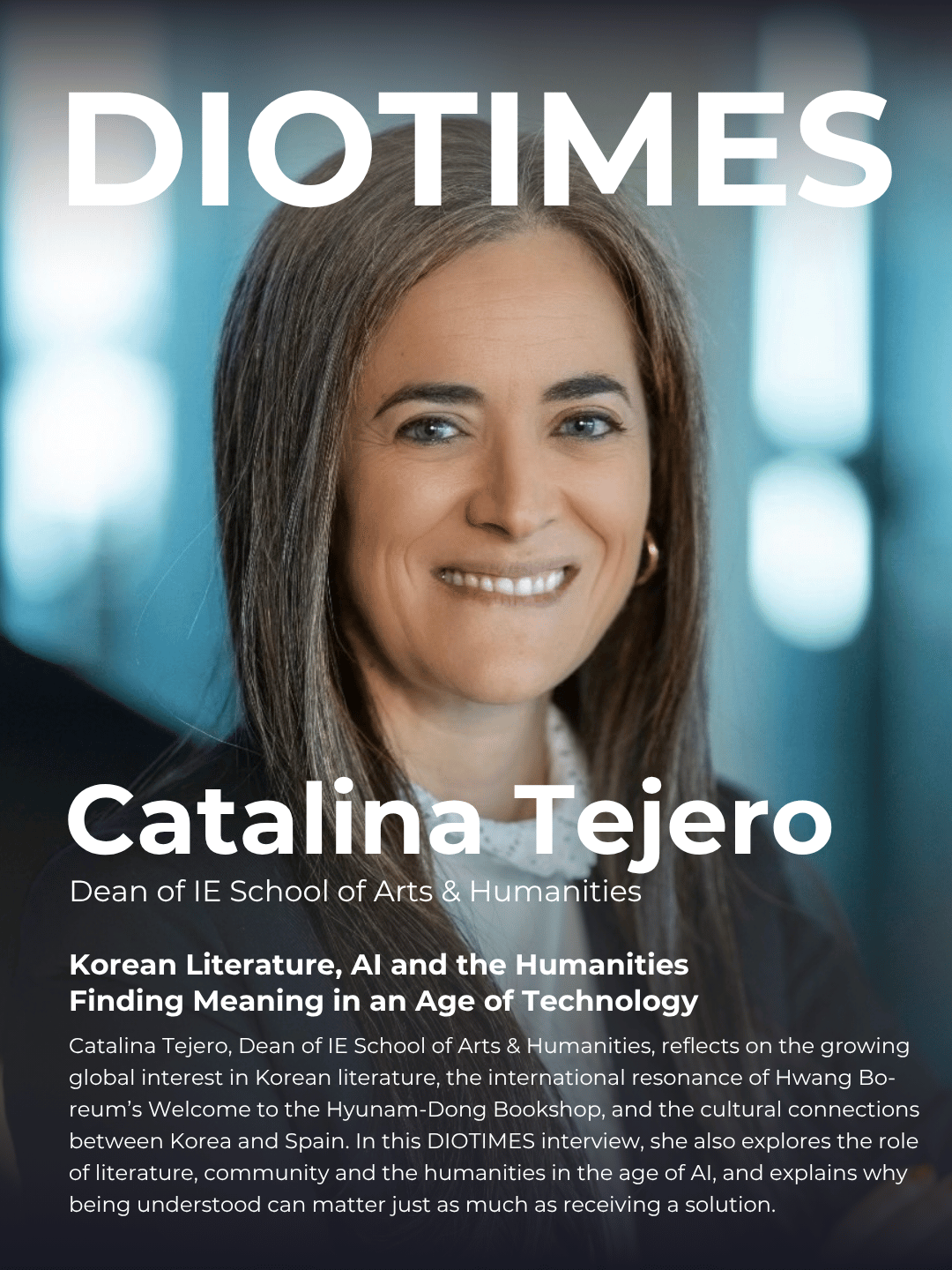
I serve as Dean of IE School of Arts & Humanities at IE University, where much of my work revolves around a question that feels increasingly important: what should a humanities education look like in a world being reshaped by technology and artificial intelligence?
Personally, I do not see the humanities and technology as opposing forces; quite the opposite. The more powerful our technological tools become, the more important it is to understand how we make decisions, what we value, and what kind of societies we want to build.
For our students, literature, philosophy, or the arts make life intellectually and imaginatively richer, while also developing the capacities that matter in almost any profession today and will matter even more in the future, such as interpreting complexity, questioning assumptions, or exercising judgement.
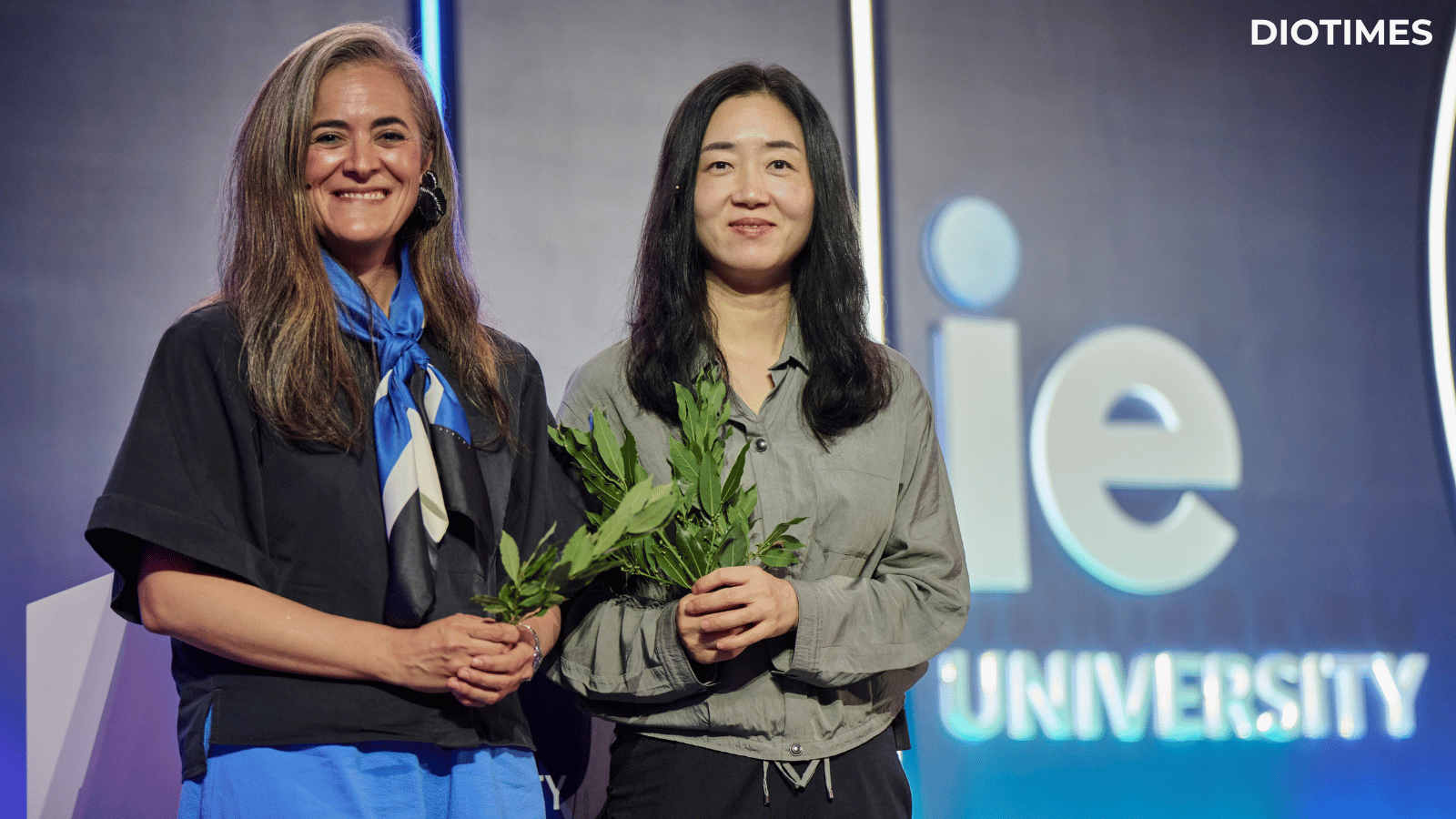
Why do you think “Welcome to the Hyunam-Dong Bookshop” has resonated so strongly beyond Korea?
One of the things Hwang Bo-reum told me before our conversation at Hay Festival was that she wanted to create a place where people could have conversations that are often missing from everyday life, about the lives they want or the expectations they carry. That is rooted in a particular Korean context, but the questions travel remarkably well.
Family is a good example. Hwang spoke to me about the weight of family expectations in Korea and the sense of obligation that can come from recognising the sacrifices parents have made. Although the forms may differ, that tension between belonging to a family and becoming an autonomous person is very recognisable in Spain too.
The same is true of community. Her characters gradually form relationships outside their families and find somewhere they can belong, and I think many readers recognise the need for those spaces.
Perhaps globalisation has produced an interesting double movement: we are more curious about the specificity of other cultures, but also increasingly interested in discovering which human questions remain universal.
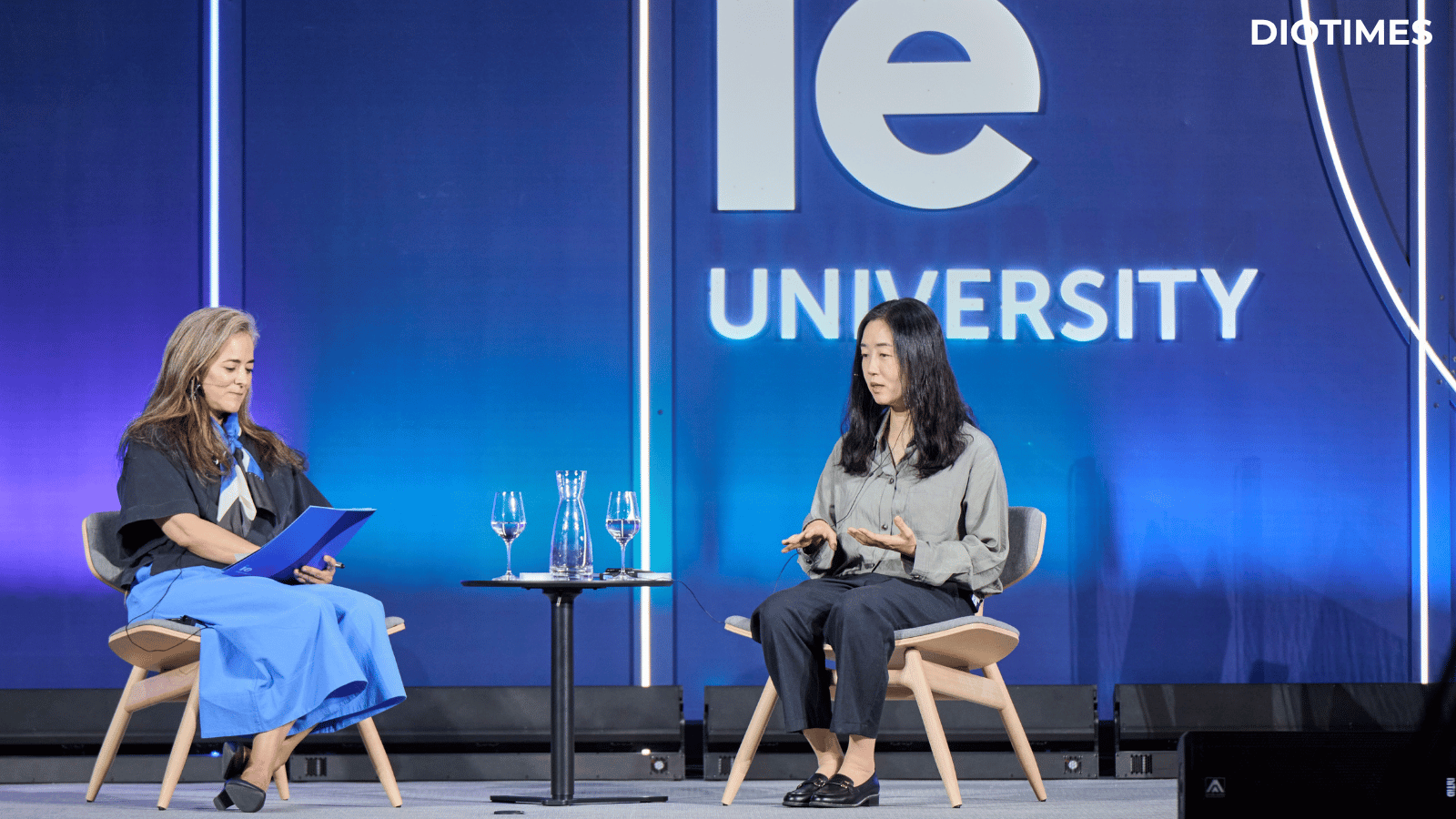
How do you see Korean literature being perceived in Spain and Europe today?
The perception of Korea in Spain is extremely positive and has also become much broader. For many Europeans, Korea was once associated primarily with technological and industrial success. Film, art, and now literature have added a very different dimension to that picture.
Han Kang is obviously important here. Her Nobel Prize in Literature has given Korean literature extraordinary visibility, but the interest goes beyond one writer. What European readers are discovering is a literary culture with very different voices and registers.
That is why I find the contrast between Han Kang and Hwang Bo-reum interesting. “The Vegetarian” and “Welcome to the Hyunam-Dong Bookshop” could hardly be more different in tone. Han Kang can be darker and formally demanding, while Hwang works through warmth and everyday life. Yet both, in very different ways, examine the interior lives of women and the tension between individual desire and the expectations of family and society. That breadth, to me, is probably more interesting than trying to define a single “Korean literature.”
Does Korean literature need a different cultural bridge from Korean film, television or music?
Literature inevitably travels differently because language sits at its centre. Translators, editors, and publishers are part of the cultural bridge itself.
But I also think readers today are not only more comfortable entering worlds that are unfamiliar to them; they increasingly seek out that experience. In fact, part of the pleasure of reading literature from another country can be that combination of recognition and distance. We encounter social conventions or ways of speaking that may be unfamiliar, but at the same time recognise emotions or conflicts that are very close to our own experience.
ㅤ
Where do you see potential for deeper cultural exchange between Korea and Spain?
I think the opportunity lies in moving beyond simply presenting one country’s culture to the other and creating more occasions where people actually work, study, or think together.
Hay Festival is a good example. People come to hear a writer, but the value of the festival is also in what happens around the program: the conversations between events and the temporary community that forms around ideas.
What does your conversation with Hwang Bo-reum suggest about culture and community in the age of AI?
Something Hwang said stayed with me. Her characters do not always need their problems solved. Sometimes they need somewhere to articulate them and someone willing to listen, and that distinction feels particularly interesting now.
Technology is extraordinarily good at removing friction. An algorithm can recommend a book remarkably well, and AI can give us increasingly good answers. I use those tools constantly and see enormous value in them, but human relationships often work differently. We repeat ourselves, change our minds, and sometimes spend an hour discussing a problem without solving it.
Yet the conversation can still matter because being understood is not the same as receiving a solution.
This is why I suspect physical spaces of togetherness may become more, rather than less, valuable as technology becomes more capable. We want efficiency, but we also enjoy serendipity, detours, and encounters we did not plan.
I have been thinking of this as an “economy of meaning”: one in which the value of an experience lies not only in what we consume, but also in the relationships, sense of belonging, and shared meaning that form around it. I use the word “economy” deliberately, because these dimensions increasingly influence where we choose to spend our time, attention, and money.
What would you like readers in Korea and internationally to take from this cultural exchange?
I would hope for curiosity in both directions. One of the most interesting consequences of globalisation is that access to another culture no longer needs to stop at its most visible exports. Once an audience becomes interested in Korean cinema or music, there is an opportunity to go deeper.
Literature is particularly powerful in this respect because it gives us access to interior life. We do not simply learn what another society looks like; for a few hundred pages, we inhabit somebody else’s assumptions, anxieties, and desires.
And the surprise comes when something that initially seemed culturally distant becomes unexpectedly familiar. That does not mean that Spain and Korea are the same. It means that literature allows us to understand both the distance between cultures and the human experiences that can cross it.