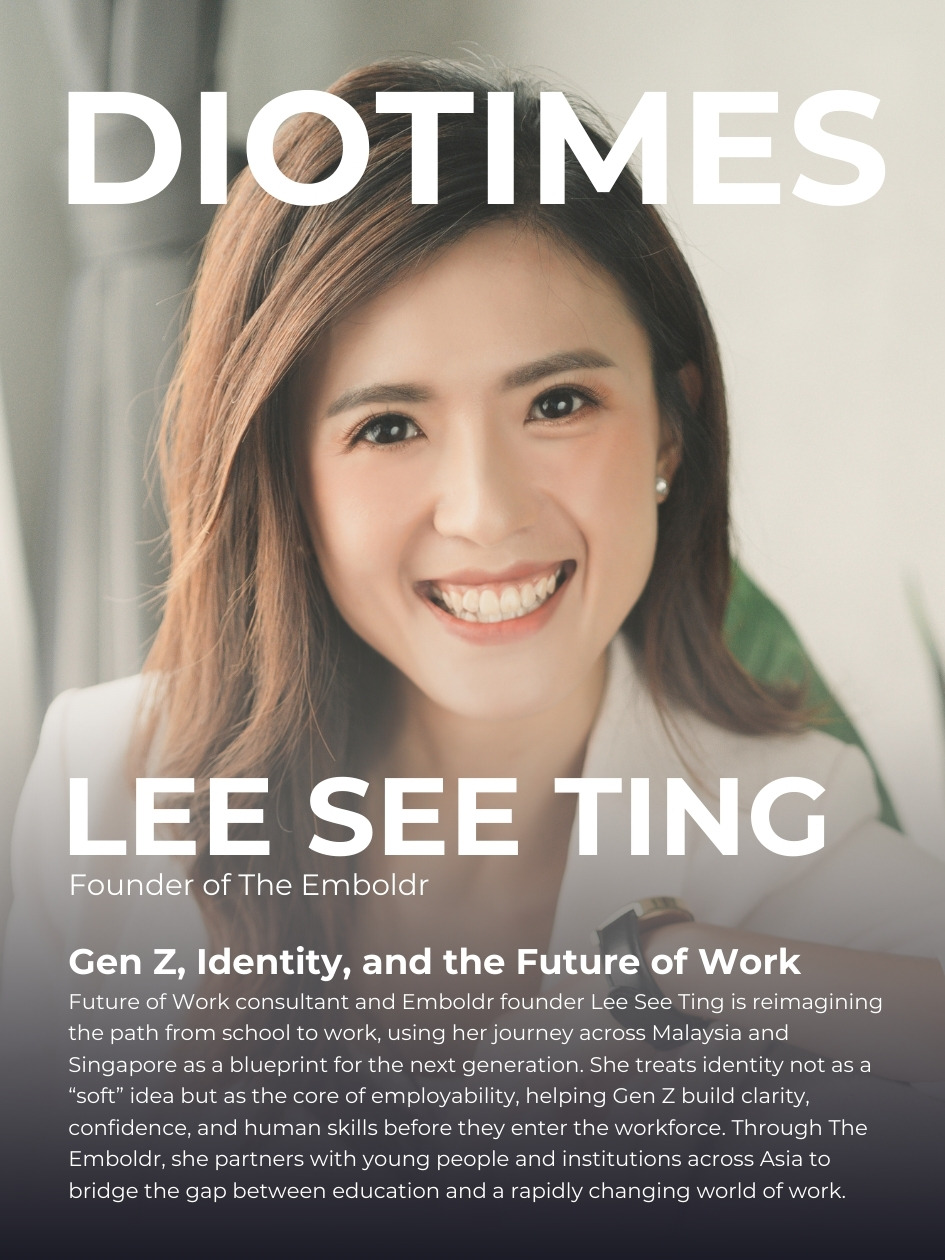
Could you briefly share your personal journey from growing up in Malaysia and Singapore to becoming a Future of Work consultant and founder of The Emboldr?
I was 12 when I left Malaysia for a scholarship in Singapore. I remember packing my bags, not really knowing what I was walking into.
Those first few years were brutal. New country, new language, new everything. I didn’t have a choice but to adapt, and honestly, it was terrifying.
After university, I did what was expected — got the corporate job, the stable paycheck, checked all the boxes. But something felt off. I kept seeing young people struggling to figure out their future, myself included, and our education system just wasn’t helping them.
That’s when I knew I had to do something.
I had no idea where to start, so I began reflecting on my own journey. The more I looked around, the more I realized our education system was preparing people for a world that doesn’t exist anymore.
I quit with no backup plan — just a stubborn belief and radical faith that someone needed to bridge the gap between what schools teach and what the world actually needs.
People thought I was crazy. They said I didn’t have the qualifications or experience, and honestly, they had a point.
But I kept thinking about my 12-year-old self landing in Singapore with no roadmap, no connections. If I could do that, I could do this.
The truth is, I’m still figuring it out. But I’d rather build something imperfect than wait for the perfect plan before I start.
That’s how The Emboldr (formerly Kidzstarter) was born.

What personal experiences or turning points led you to focus your career on youth empowerment and the future of work?
Being a 12-year-old “scholar” in Singapore came with enormous pressure. For the first two years, I tied my entire identity to my grades. I thought to myself, “If I wasn’t excelling academically, who even was I?”
Then I started failing subjects.
When my dad came to visit, I handed him my report book and I was terrified. Not just because of the failing grades — but because I felt like I had failed him. I was sent to Singapore to succeed, and here I was, falling apart.
He glanced at the report book and signed it without a word.
Then he looked at me and said: “The world is out there.”
I didn’t understand it then. But those five words changed everything.
He wasn’t dismissing my struggles. He was telling me that my worth — my future, my identity — couldn’t be contained in a report book. That there was so much more waiting for me beyond what society expected or what grades could measure.
That moment became my turning point.
It’s why I do what I do now. I want the next generation to know what my dad knew: that who you are is so much bigger than what’s expected of you. Your future isn’t written in test scores — it’s discovered through experimentation, through failure, through figuring out what’s within you.
That’s not what our education system teaches. But it’s what young people need to hear.
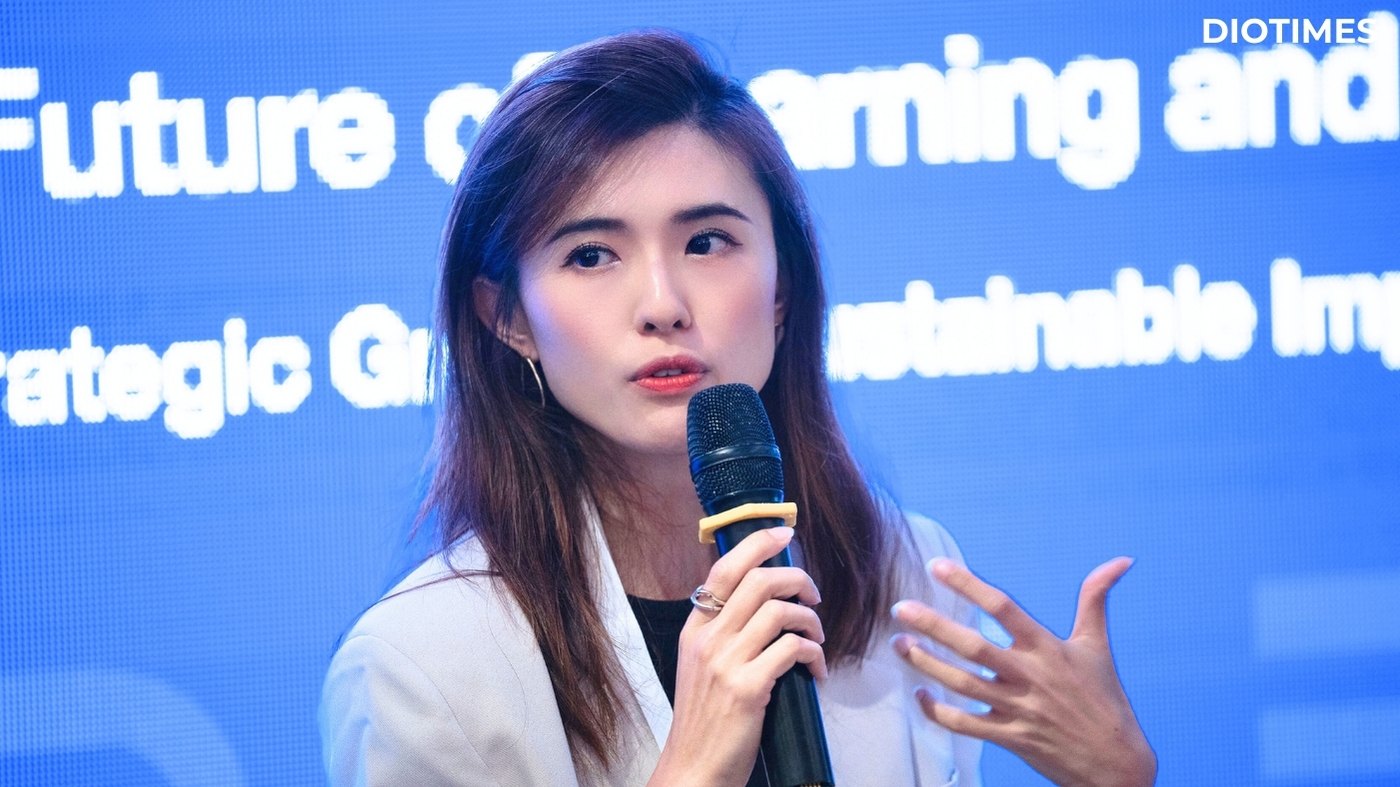
You first founded Kidzstarter and later evolved it into The Emboldr. What was the original idea behind Kidzstarter, and why did you decide to reimagine it as The Emboldr?
When I first started Kidzstarter, we were serving 10–15-year-olds — primarily Gen Z. The name “Kidzstarter” represented the start of this generation, meeting them while they were still kids.
Then COVID hit, and everything stopped. I became a full-time caregiver for my dad, and the business went on hold.
Nearly two years later, I returned to pick up where I left off. But the world had changed. I saw how rapidly the future of work was shifting, and the gap between what education was preparing people for and what the workforce actually needed had grown even wider.
That’s when I realized Kidzstarter wasn’t big enough for what needed to happen. We weren’t just serving teenagers anymore — we needed to serve everyone navigating this new world of work: leaders, educators, organizations, and, yes, young people too.
So Kidzstarter became The Emboldr. The mission evolved from simply empowering the next generation to making the next generation bold enough to adapt, lead, and thrive in the future we’re building together.
For readers who may be new to your work, how would you describe The Emboldr in one or two sentences? What problem does it solve for young people, and what value does it bring to schools, universities, and companies?
The Emboldr is a future-workforce platform that bridges the gap between education and the realities of work by helping the next generation build identity, confidence, and human skills before they enter the workforce.
For young people, it turns uncertainty into clarity and readiness; for schools, universities, and companies, it creates a pipeline of future-ready talent who can adapt, collaborate across generations, and contribute meaningfully from day one.
You often emphasize identity and purpose in your work with young people. Why are identity and purpose so central to how you design your programs?
Identity and purpose sit at the centre of my work because skills alone don’t sustain people through uncertainty — identity does.
In a world where roles, industries, and career paths are constantly changing, young people aren’t struggling because they lack ability. They’re struggling because they lack a stable sense of who they are, what they stand for, and how they create value when the rules keep shifting. Without that, confidence is fragile, decisions feel overwhelming, and motivation disappears the moment things get hard.
I design the programs around identity and purpose because they act as an internal compass. When young people understand their values, strengths, and motivations, they become more adaptable, resilient, and self-directed. They are able to learn new skills, navigate setbacks, and make intentional choices instead of chasing external validation.
Rather than asking, “What job should I get?”, they begin asking, “How do I contribute?” That shift changes engagement, ownership, and long-term growth.
Identity and purpose are not “soft” concepts. They are the foundation that makes skills, performance, and adaptability sustainable in the future of work.
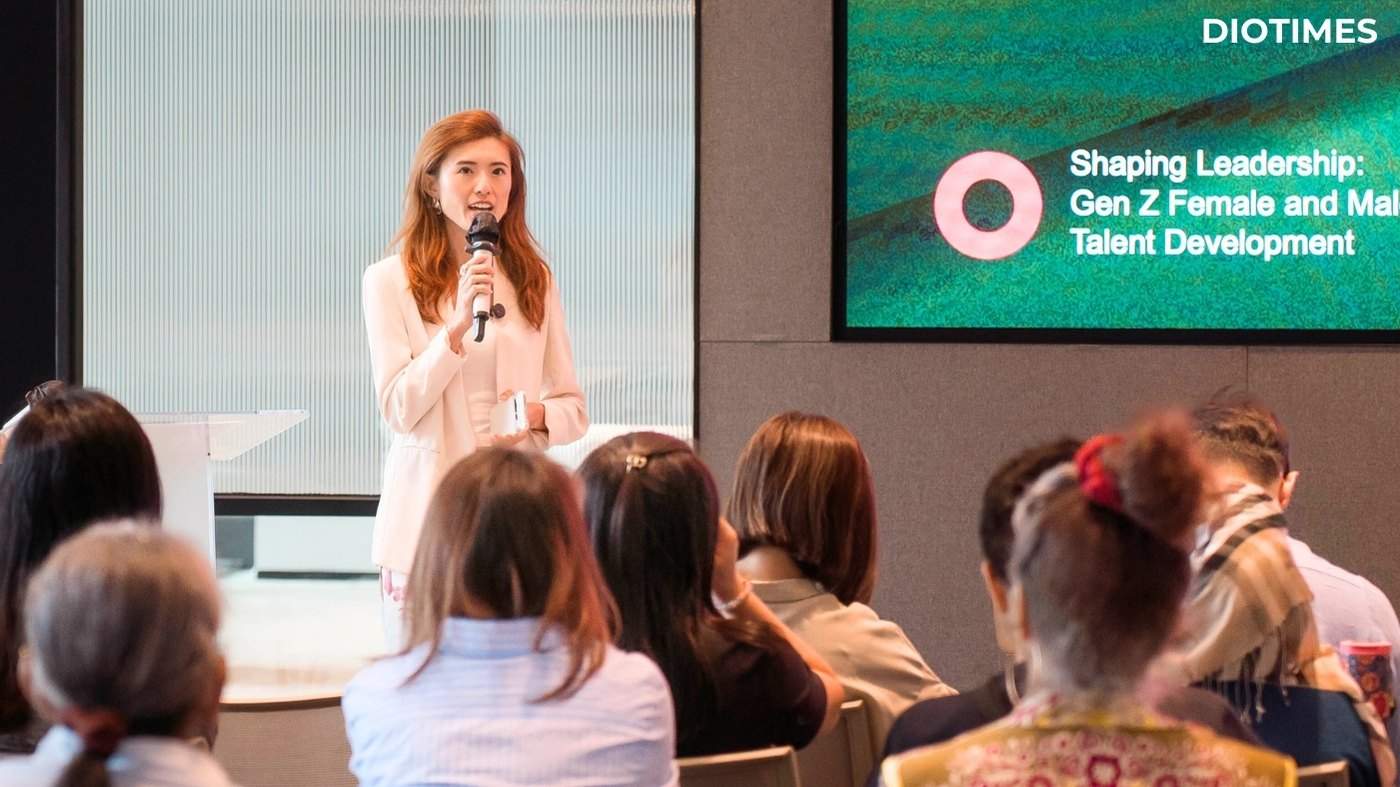
In your book “Gen Z Secrets,” what are one or two common misconceptions about Gen Z that you wish leaders, parents, and educators would finally let go of?
“Gen Z is lazy or entitled.”
What’s often mistaken as entitlement is actually discernment. Gen Z isn’t unwilling to work. They’re unwilling to work without meaning, clarity, or psychological safety. They grew up watching burnout, layoffs, and instability, so they ask better questions earlier: Why does this matter? Is this sustainable? Does this align with who I am?“Gen Z doesn’t know what they want.”
In reality, Gen Z is deeply reflective about identity and purpose — but they’re navigating a world that keeps shifting beneath their feet. They don’t lack ambition; they lack safe spaces to experiment, fail, and evolve. What they need isn’t pressure to “figure it out,” but guidance to build self-awareness, adaptability, and confidence over time.
From your direct work with Gen Z, what are they most anxious about today, and what do they truly want from their careers and lives beyond traditional markers of success?
From my direct work with Gen Z, their biggest anxiety right now is uncertainty. Many are quietly worried about whether there will still be a place for them in the workforce as AI reshapes roles faster than job descriptions can keep up. They’re asking, “Will I still be employable?” and “Am I investing my time in skills that will still matter?”
At the same time, they’re deeply torn. They want work that is meaningful and aligned with who they are — but they’re also very pragmatic. Meaning alone doesn’t pay the bills. They’re looking for careers that allow them to earn a living and feel a sense of purpose, contribution, and growth.
Beyond traditional markers of success like titles or paychecks, what Gen Z truly wants is a life that feels coherent. Work that doesn’t require them to abandon their values. Careers that evolve with them. And environments where it’s safe to learn, experiment, and not have everything figured out yet.
You describe yourself as a Future of Work consultant. Looking ahead to the next decade, what are the two or three biggest shifts you see reshaping how young people will work and build their careers?
First, careers will become portfolio-based, not linear. Young people will no longer define themselves by a single job title or employer. Instead, they’ll build careers across projects, platforms, and phases of life, combining full-time roles, freelance work, internal gigs, and side ventures. The question won’t be “What do you do?” but “What problems can you solve, and in what contexts?”
Second, human skills will become the real differentiator in an AI-powered world. As technical tasks become automated, qualities like adaptability, judgment, communication, and sense-making will matter more than ever. Young people who can learn fast, collaborate across generations, and navigate ambiguity will stay relevant, even as roles change.
Third, identity will drive employability. Young people will need clarity about who they are, what they stand for, and how they create value. Careers will be less about fitting into predefined ladders and more about articulating purpose, transferable skills, and personal narratives that travel across industries and life stages.
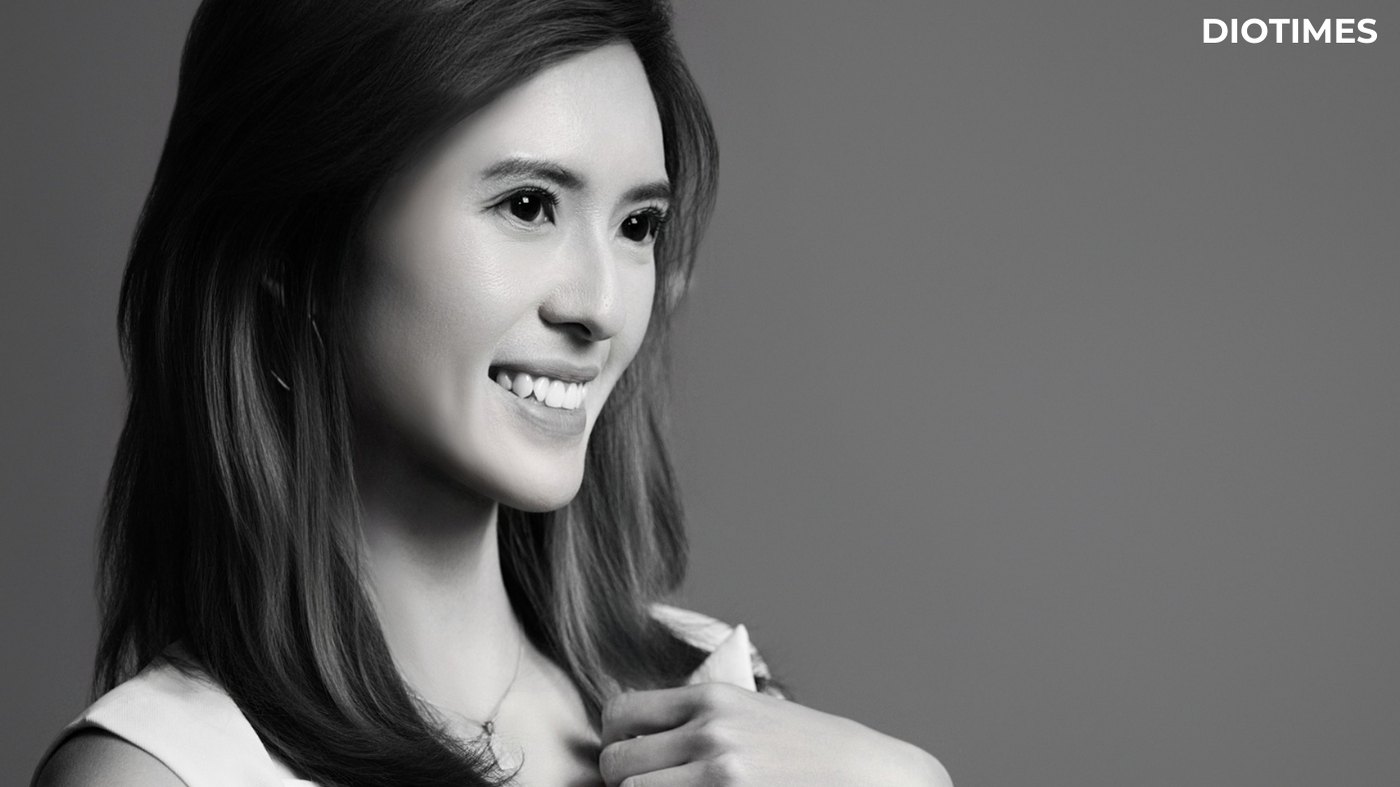
Which skills and mindsets do you believe are non-negotiable for Gen Z to thrive in this new world of work, especially in an age of AI and automation?
For Gen Z to truly thrive in an age of AI and automation, the most non-negotiable “skill” isn’t technical at all — it’s identity clarity.
When roles, industries, and even entire career paths are constantly changing, skills alone aren’t enough. What anchors young people is a strong sense of who they are, what they value, and how they want to contribute. Identity becomes the internal compass that helps them steer their direction and re-steer when the world inevitably shifts.
Built on that foundation, a few mindsets become critical.
First is adaptability with intention — not just reacting to change, but making conscious choices about when to pivot and when to stay the course.
Second is learning agility — the ability to unlearn, relearn, and apply new skills quickly as AI reshapes work.
Third is human sense-making: judgment, empathy, communication, and ethical thinking — the things machines can’t replicate, but organisations desperately need.
In this new world of work, Gen Z doesn’t need a fixed career plan. They need a strong identity, the confidence to evolve, and the mindset to design their own path, again and again.
From your vantage point, what unique strengths and challenges do Asian Gen Z – including those in places like Korea, Singapore, and Malaysia – have compared to their peers globally?
Many young people across places like Korea, Singapore, and Malaysia grow up with a strong sense of discipline, adaptability, and responsibility. They’re often highly resourceful, globally aware, and used to navigating fast-changing environments.
At the same time, many Asian Gen Zs were raised in cultures that prioritise achievement, stability, and external validation. As a result, they can be highly capable on paper, but internally uncertain about who they are and what they actually want. There’s often a quiet tension between following expected paths and wanting meaningful, self-directed lives.
Failure is still heavily stigmatised in many parts of Asia, which can limit experimentation, risk-taking, and honest conversations about doubt or burnout.
If a university or company in Asia wants to better engage and empower Gen Z, where should they start? What is one practical change they could implement within the next 6–12 months?
The place to start is not with more programmes or perks — it’s with how young people are seen and spoken to.
They lean in when they feel trusted, heard, and allowed to bring their whole selves.
Create structured spaces for identity and voice. This could look like:
Integrating short, facilitated reflection sessions into internships, leadership programmes, or classes where young people articulate what they value, how they learn, and what kind of work energises them.
Pairing Gen Z with managers or faculty trained to ask better questions — not “What role do you want?” but “What problems do you care about solving?” and “What kind of environment helps you do your best work?”
Giving young people ownership over real projects with real impact, while normalising learning, iteration, and even failure.
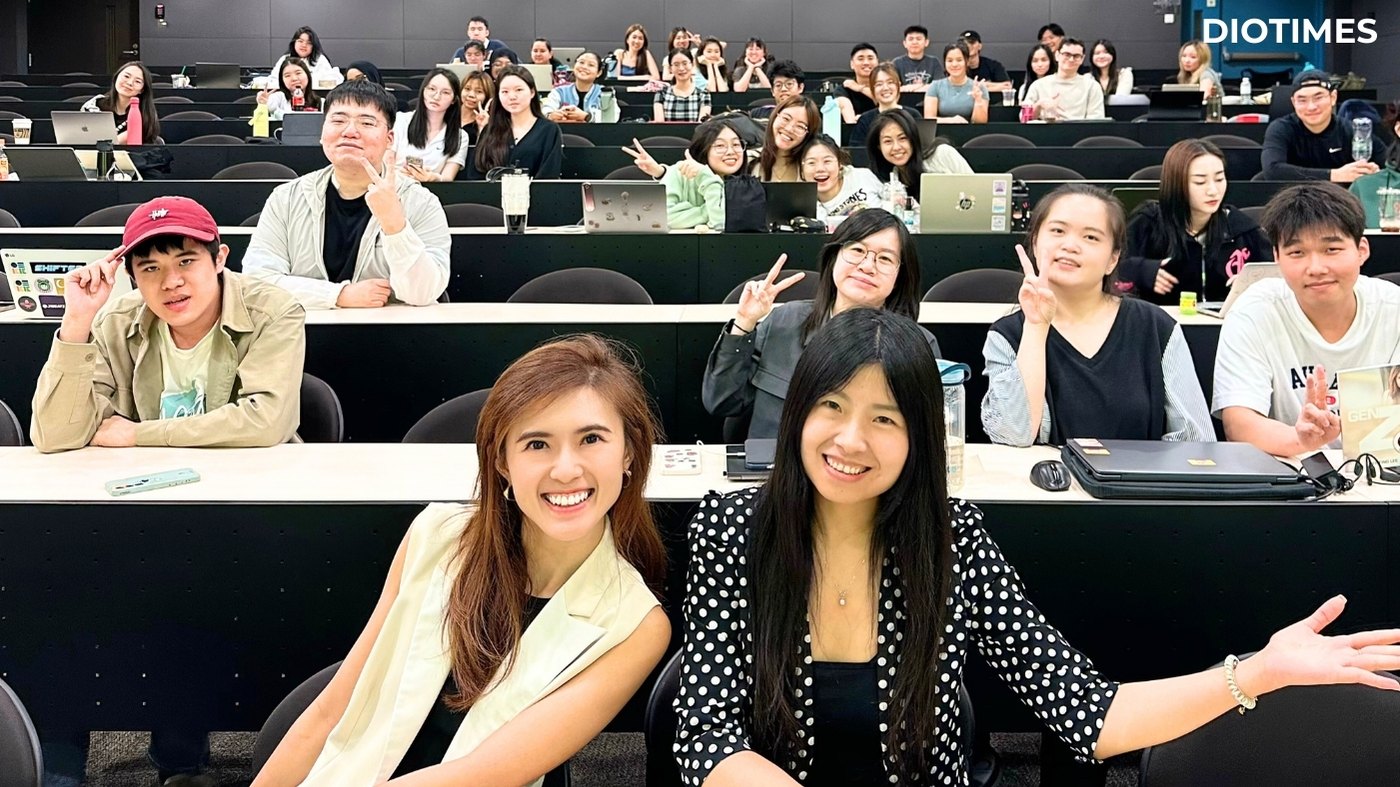
You have spoken at major Future of Work conferences and been featured in various media. How do you see your role in the broader global conversation on Gen Z and the future of work?
I see my role as a bridge-builder.
Globally, the future-of-work conversation is often dominated by technology, productivity, and systems. Those matter, but what’s often missing is the human translation layer: how real young people make sense of uncertainty, identity, and work in the middle of all this change. That’s where I sit.
My work brings three worlds into the same room:
the lived realities and voices of Gen Z across Asia,
the expectations and pressures leaders and organisations are navigating, and
the education systems trying to keep up with both.
I’m not here to label a generation or romanticise them. I surface patterns from direct ground work — what young people are anxious about, what motivates them, and where systems are misaligned — and help leaders redesign work, learning, and leadership in ways that are human, relevant, and future-forward.
At a global level, my contribution is this:
to shift the narrative from “How do we manage Gen Z?” to “How do we redesign systems so multiple generations can thrive together?”
When we stop treating Gen Z as a problem to solve and start seeing them as a signal of what’s broken and what’s possible, the future of work becomes less frightening and far more intentional.
Looking ahead, what is your long-term vision for The Emboldr and for your work with young people globally over the next 10–20 years?
Looking ahead, my long-term vision for The Emboldr is to become a global bridge between who young people are becoming and how the world of work is evolving — not just another education platform, but a living ecosystem that grows with each generation.
Over the next 10–20 years, I see The Emboldr doing three things at scale:
First, anchoring identity before employability.
As careers become non-linear and roles continue to disappear, the most durable advantage young people will have is a strong sense of self — their values, strengths, and direction. The Emboldr will help young people build identity, resilience, and adaptability early, so they can navigate change without losing themselves.
Second, redesigning the transition from education to work.
The biggest failure in today’s system isn’t a lack of talent — it’s the lack of translation. We’ll work with schools, universities, and employers to co-create pathways where learning, work, and purpose are connected, human, and relevant. Less “ready-made careers,” more future-forward humans.
Third, shaping systems, not just individuals.
While we’ll continue to support young people directly, my deeper commitment is to influence the systems around them — leadership, hiring, performance, and culture — so they evolve alongside the next generation, instead of resisting them.
At a personal level, my work will always stay grounded, on the ground, listening, learning, and translating across generations.
Finally, if you could share one piece of advice with an 18–25-year-old in Asia who feels lost about their future and is reading DIOTIMES today, what would you say?
Run small experiments. Learn fast. Build skills that compound — for example, communication, self-awareness, problem-solving, resilience. These will matter longer than any single degree or title.
Many people wonder if they are on the “right” path.
The truth is there isn’t a “right” path; there’s only your path.
The real win is learning how to course-correct without losing yourself.
Your job at this stage isn’t to have it all figured out.
Your job is to build identity before certainty.